
Entrepreneurs are now taking tentative steps to other markets and are starting to move from local to global thinking.
“Our products have been available abroad for about 50 years, and we started to expand with single-brand stores on markets like Greece and France eighteen months ago. We have products tailored for every market,” says Mircea Turdean, chief executive officer of cosmetics company Farmec Cluj-Napoca, which has an about 120-year history.
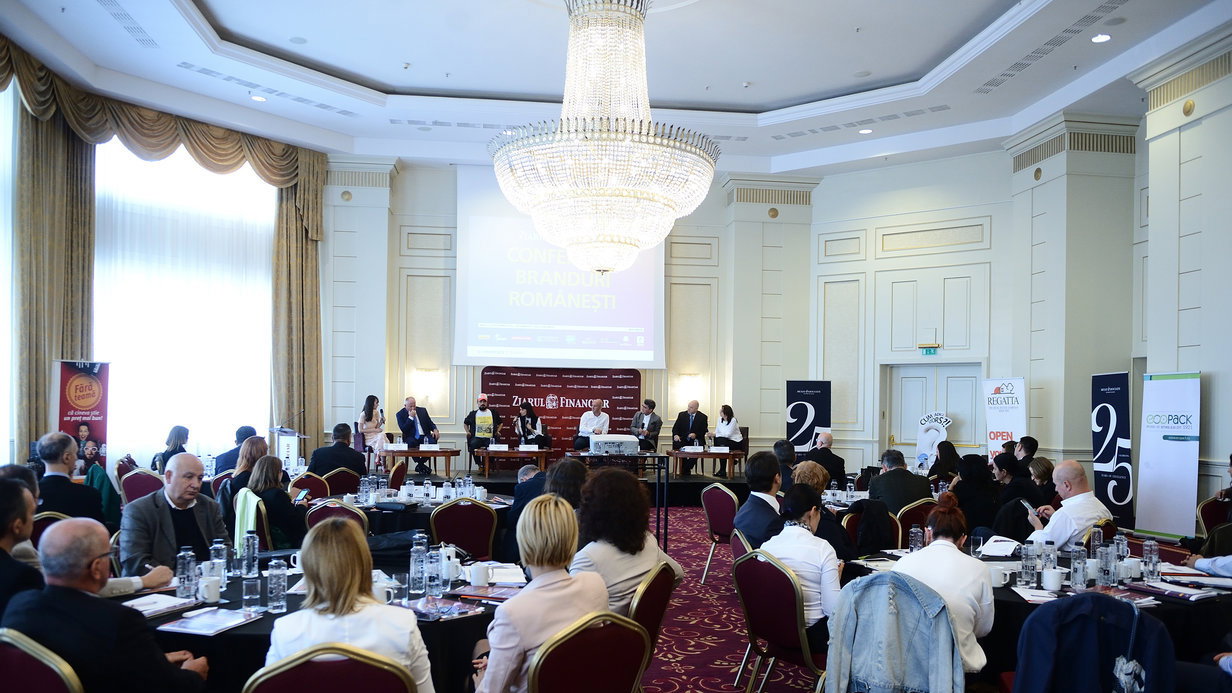
The executive attended the `Romanian Brands’ ZF conference on Tuesday, where local executives and entrepreneurs discussed what a local brand means, what the chances for growth are and how the local market can produce a global brand. ZF organized the conference together with Altex, Farmec Cluj, Musat si Asociatii, Albalact, Regatta Estate, ecoPack, Cris-Tim, Domeniile Samburesti and Aqua Carpatica.
These companies are businesses that either recently or decades or even more than a century ago launched brands that reached the homes of millions of consumers. One example is Bitdefender, a ‘made in Romania’ ambassador, as the company’s products are available in about 180 regions throughout the world.
“When a brand seeks global expansion, it needs to know the product it sells is very important. In our case, it is an intellectual asset, which, besides the product itself includes other things like technical support, partnerships, as well as the entire ecosystem of the product,” says Ciprian Istrate, VP of Consumer Solutions with Bitdefender.
“Another important thing globally is positioning, so if you go to Japan, for instance, the product has to be relevant for that market. Ensuring customer loyalty is equally important.”
Over the years, other companies have taken the courage to go abroad, where they are now seeing sales of millions of euros. Istrate says he found Farmec Cluj products on the shelves of a store in Japan next to Shiseido’s, a famous international brand.
“Our biggest sales are in Asia, where each product costs several hundred euros or dollars. In comparison, we give Romanian female consumers a price that takes into account the realities of Romania,” says Mircea Turdean.
Another local cosmetics producer, which has expanded abroad is Ivatherm, which will be available on 15 markets by yearend, including Iran.
“By the end of the year, we will be present in 15 countries; last year, we were present in 5 countries. The process of entering another market takes time as the products have to be registered on certain markets. Iran is the largest market, and we register the highest exports to China. 35% is represented by exports,” Rucsandra Hurezeanu, Ivatherm founder, said.
Ivatherm founder added that the company has a market share of 10% and ranks among the top four local players, but the market is very small, totaling EUR25 million. Its competitors are Vichy and Avene, which have international giants behind them.
Other Romanian brands like Dero and Arctic are held by corporations like Unilever or Arcelik, but they are still brands for the local market.
“I think the international billion euro brands are US, Chinese, Japanese brands because they operate on a big local market. Romania is not as big a market,” Rucsandra Hurezeanu says.
Eduard Uzunov, chairman of real estate company Regatta Estate, believes one obstacle for the development of the local business sector has been and still is the lack of predictability. He says entrepreneurs do not receive support from the authorities.
“We do not get incentives; we are not treated as something they are proud of. There is a lack of communication between us and authorities. The authorities do not pick on multinationals, they pick on us. Transparency is the first step. There are other steps, as well, like a better communication, like knowing that laws are modified to support Romanian brands.”
On the other and, Radu Timis, owner of Cris-Tim, says he has always tried to do things by himself.
“Had it not been for the political meddling, the Romanian entrepreneurship would have made much more progress. Cris-Tim has never been involved in politics, never did any business with the government. I’ve always believed in doing things by myself. If I were to look back and say what the brand taught me I’d say it is the certainty that you will be there tomorrow and in 100 hundred years.”
(English version by Loredana Fratila-Cristescu)