
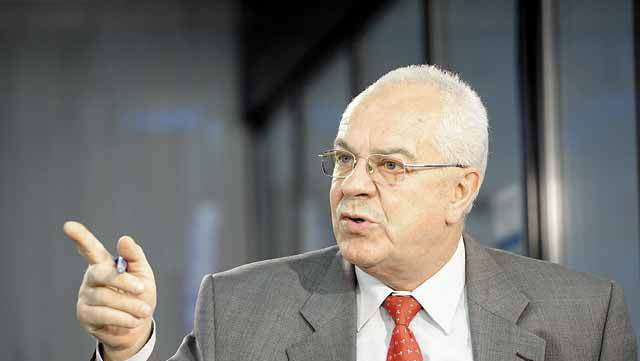
The average wage in Morocco, EUR250 is 35% of the RON3,100 (about EUR700) at the plant in Mioveni, says Constantin Stroe, Automobile Dacia vice-president and chairman of the association of automotive manufacturers in Romania ACAROM.
“Renault withdrawing from Romania completely is out of the question. Yet production can be moved little by little and if a single shift from Mioveni is transferred to Tangiers, that means 3,000 layoffs at Dacia plant and 18,000 layoffs at component suppliers and this avalanche will be impossible to stop.”
According to Dacia vice-president the investments in Morocco are made in order to boost production of the plant in Tangiers from 109,000 cars as assembled last year to almost 400,000, the installed capacity of the plant.
“The Dacias made in Mioveni and in Tangiers will coexist on European markets. Under the circumstances, the issue of using only part of the production capacity of one of the plants will be brought up. The decision in this scenario that may happen will be based on competitiveness and productivity criteria,” Dacia’s VP said.
Once manufacturing started in Tangiers, Renault ‘modified’ the structure of the management of the region, and the general manager of Automobile Dacia was also put in charge of the plants in Morocco and Turkey, deciding what to manufacture for what markets depending on costs.
Moreover, Dacia’s best-selling model, Sandero, has been assembled in Tangiers, too, from where it can be much more readily and cheaply exported to markets such as France and Spain.
Dacia’s Romanian plant does not have quick access to Western Europe via highway and will not have it in the next few years, either, because no one has even done so much as a feasibility study on the Pitesti-Sibiu highway. Moreover, cars shipped by train reach Constanta harbor in 24 hours, while Tangiers already has a highway connecting the plant and the harbor and is closer to Western Europe.
“The plant in Mioveni will be penalized for its age, national transport infrastructure and government support. The too wide a gap between wages in the two plants will be decisive when decisions to transfer production or choose where to make the new models have to be made. The consequences of such decisions will not only affect Dacia’s employees, but also the more than 200,000 people working in the Dacia-related component and service industries,” Constantin Stroe said.
According to market data, hourly labor cost at Dacia after last year’s raises stands at EUR7.6 per month, while the average in the automotive industry of Romania is EUR4.5. Whereas employees at the Mioveni plant earn more than RON3,100 per month on average, suppliers’ employees earn RON1,700 per month on average.
Compared against the region, the gross average wage at Skoda, the largest exporter of Czech Republic is more than EUR1,380, 50% higher than the national average, according to Automotive News Europe. Average gross wage at Automobile Dacia stood at about RON4,500 or EUR1,010 in 2013.
Although a Czech earns EUR400 more than a Romanian, that Czech working for Skoda makes only 50% more than the average wage of the country, while in Romania a Dacia employee makes twice the national gross average wage.
(English version by Loredana Fratila-Cristescu)