
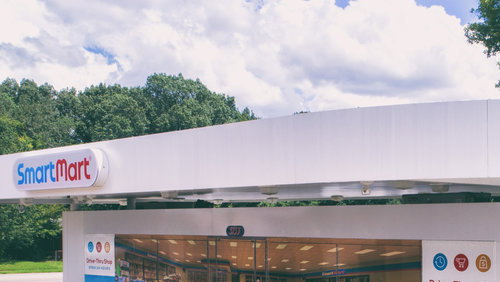
“The startups, the IT industry in Romania in on the rise. We have become a technology hub, you can’t compare Memphis to Bucharest in terms of software and technology. We are strong in this area, have lots of companies here. It is a very interesting thing that you can find top developers in Romania among students, as well, which shows schools continue to turn out well-trained people,” Ilinca said.
He used one of his employees as an example, who was a fourth-year student and developed more than 60% of the code used in the complex software platform of world’s first completely autonomous store, which operates in Memphis, US.
Cornerstone Technologies, an IT company based in Bucharest, developed in partnership with US customers three novel projects: Smart Mart – the first automated store in the world, a medical platform that provides online solutions and a smart quickboard, Daniel Ilinca said.
“Smart Mart was launched and is operational in Memphis, US. It is a rather big automated store, about 100 square meters. You can drive through, park, reach for a display, order a product, a flap opens and you pick up the products. There is no one inside. It’s all automated,” Ilinca said.
“The next development step is to go with a product list, scan it, have the robot bring you the products. The person placing the order has to have their driver’s license scanned if they order cigarettes or alcohol and the system checks to see you are old enough or not.”
Every software system of that store is controlled remotely 100% by the Cornerstone Technologies team in Romania, where they were developed, while the robot that deliveries the products was developed in the US. The project started in 2014 and is still under development. Amazon and Walmart have already shown interest in the prototype.
Software and IT platform development for international clients is the main stream of income for the local IT industry not just for Cornerstone Technologies, one of the thousands of such companies on the market.
Exports of local companies and support centers opened by multinationals should amount to EUR2.7 billion this year, according to Pierre Audoin Consultants, while demand from domestic clients should reach EUR935 million. Romania’s software and IT services exports should reach EUR5 billion by 2020, when the number of employees in the industry should reach 114,000 from the currently 90,000.
(English version by Loredana Fratila-Cristescu)