
The country now has only two state-run banks left and two privately-held banks which are Romanian-controlled. It remains to be seen what implications this will have for the economy.
Banca Carpatica, controlled by Sibiu businessman Ilie Carabulea and Banca Feroviara of Valer Blidar are the only Romanian-controlled lending institutions in the local banking system, which total an insignificant market share of 1.2% of the total assets of around EUR80 billion.
Since the beginning of the year two locally-controlled banks have been reclassified by the central bank following changes in their shareholding structure, and included in the category of foreign-controlled banks: Banca Transilvania (TLV.RO), which came to be 50.62% owned by foreign shareholders, and Libra Internet Bank, whose majority shareholder, US investment fund Broadhurst, made a capital increase and boosted its stake from 49.88% to 51.3%.
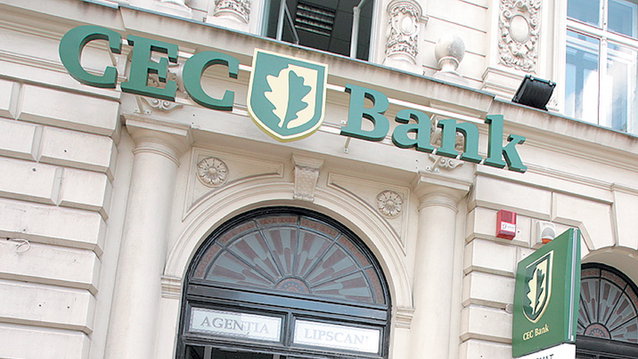
Romanian capital is mainly represented by the two state-run banks CEC Bank and Eximbank, whose total market share by assets fell by 0.7 percentage points in the first five months of this year. While at the end of 2012, CEC and Eximbank together had 8.4% of the banking system assets, in May 2013 they were left with only 7.7%, with the decline mainly due to CEC’s falling market share.
Foreign-held banks have now 91.1% of the system’s assets and 89% of the capital, and Romania no longer has any leverage in this vital sector for the economy, unlike other countries in the region.
(English version by Daniela Stoican)