
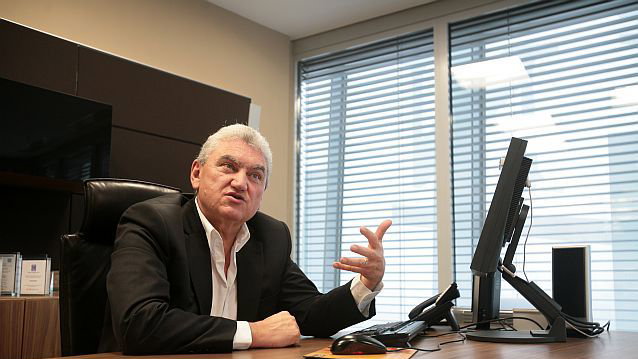
“We set out to increase our revenue and profit by 10% but we will have to permanently think about additional safety measures because over these last few years we’ve been expecting economic growth, which did not happen and now both us and companies are wondering ‘what if it doesn’t get any better this year, either?’ The rebound has been delayed for so long that we will have an even greater pressure on cost cutting in 2012.”
The banker says the trend of revenue is not certain, as no one knows what will drive the rebound of the economy; the certain thing is that there will be less money in the economy because major banks have their own limitations and cannot finance every project.
Why would there not be more money in the economy considering the high amount of lei on the interbank market and the overnight interest may go to less than 2% at times pressured by constant liquidity inflows from the central bank?
“Unfortunately, liquidity is limited to the money market only. The money market and the lending market are two divergent markets and I don’t understand why nothing is done to bring them together. This wall must be breached and communication channels must be found for the liquidity on the money market to reach the lending market,” Negritoiu says.
He explains that the interest decline on the money market is due to it being the place where money that cannot be invested elsewhere goes.
ING Bank strengthened its management team early this year when it recruited Radu Ropota from rival RBS to put him in charge of the corporate clients at the commercial banking division. In 2011, ING had recruited Bogdan Oniga from RBS, whom it put in charge of the risk management on the corporate segment, so that the bank now has a full team, as Negritoiu says.
The new strategy of ING Group to build a bank of the future until 2015 means the branch in Romania will have more autonomy in making its business decisions, as well as in meeting its financing needs, which goes for all foreign bank subsidiaries, as a result of the euro zone crisis.
“The bank that we built in Romania as a universal bank is seen as a local bank by the group and will have more autonomy. In other words, it will be able to manage its local business in a manner adjusted to the local market conditions, and the decision about the banking services and balance sheet management in Romania will be based on local priorities and not on global reasons of the group,” explains Misu Negritoiu, general manager of ING Bank Romania.
(English version by Loredana Frățilă-Cristescu)