
Romania’s biggest problem in getting long-term funding from the European Investment Bank for major infrastructure projects is its inability to design and implement sound projects, the EIB officials said.
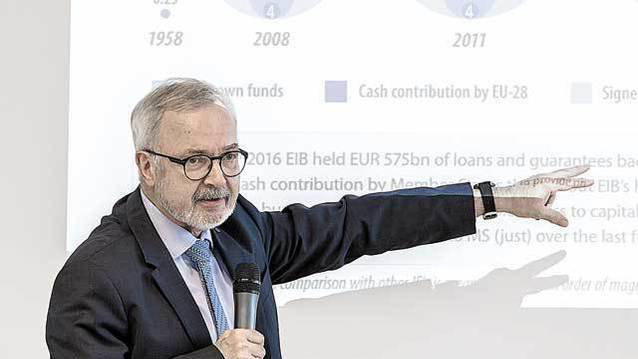
“From what I’ve seen so far, in Romania there is a big deficit in terms of capability to implement projects and turn an idea into a reality,” EIB president Werner Hoyer said.
It is about feasibly and technical studies. If the public authorities in Romania are really interested in funding for major projects, they only need to give me a call, Hoyer said. EIB funds all good projects and has not funded major infrastructure projects in Romania yet because they were weak, he added.
EIB should have joined EBRD and the World Bank in funding the Comarnic-Brasov highway in 2013 but the arrangement fell through for reasons yet unclear.
EIB provides support for every project that is good but most often the problems in Romania are related to procurement projects, said Luca Lazzaroli, EIB director general.
EIB lent EUR2.6 billion to Romania in 2011-2015, while Poland, a country with twice as many people, borrowed EUR26 billion. Hungary and Czech Republic, which have half the population of Romania, got EUR6 billion and EUR4.3 billion.
EIB became more active in Romania in 2016, granting tens of millions of euros in loans to small and medium-sized enterprises via BCR Leasing, OTP, Sogelease and in 2017 signed the biggest loan facility so far, EUR1 billion, for the co-financing of the EU funded projects. This is a 25-year loan with a seven-year grace period. Also in 2017, private healthcare provider Regina Maria got a EUR15 million loan and ArcelorMittal got a EUR3.5 million R&D loan in December 2016.
(English version by Loredana Fratila-Cristescu)