
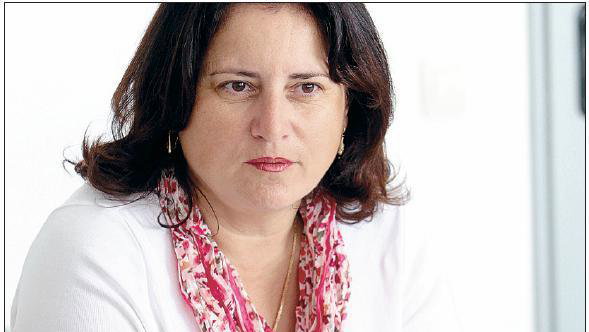
“I am not at all nervous about this year, it will be the best year for Billa Romania. We have ambitious plans. After a difficult January because of the weather, February was within our budgeted target. And Easter is coming,” says the head of Billa.
Sorana Georgia does not wish to give details on the number of stores to be opened this spring or about their location, but says “the first openings will be before Easter (April 15 i.e.).”
In 2012 the supermarket chain will open at least 10 stores, with the financing to come from the parent company which has liquidity because it sold the Selgros Cash&Carry chain to Switzerland’s Coop about a year and a half ago.
“There is still potential for new openings. (…) We are establishing this potential based on purchasing power, the unemployment rate, and up to consumer behavior,” explains Sorana Georgia, 48, who has been running the supermarket chain since the summer of 2011, and is the only Romanian woman at the helm of one of the 13 modern chain stores on the local market.
She also says in Bucharest, for instance, where wages are some of the highest in the country and the unemployment rate one of the lowest, Romanians are turning towards convenience stores.
“This is the normal evolution of retail.” At present Bucharest accommodates about one fifth of modern retail stores in Romania and nine Billa stores (the one in Otopeni airport included) out of a total of 61. Moreover, the crisis persuaded space owners to cut rent.
“We have renegotiated a whole set of contracts. With lower rent, it is easier to break even.” One Billa store needs at least one year to become profitable.
Sorana Georgia admits the crisis has affected the company’s profit margin, but the retailer has remained profitable. The manager does not offer profit figures.
As for the turnover, it rose slightly in 2011 against 2010, when it amounted to EUR272 million.
The supermarket chain opened its latest Bucharest store in the Piata Romana – Dorobantilor area in December last year. “Although the store is atypical, it is progressing very well,” says the head of Billa stores.
The supermarket is located close to the Academy of Economic Studies, which is attended by several thousand students. In the future, the company will be looking both at free-standing stores and at malls.
Sorana Georgia says in order to see how sales are going, she visits stores all across Romania. “I look at what clients have in their baskets, I listen closely to what they ask the employees and I also examine the employees’ attitude. Clients have to be treated like guests.”
Although she doesn’t give a total number of clients of the chain, Sorana Georgia says 3,000 customers per day per store is a regular number. She admits both the number of customers and the average basket have fluctuated in the past few years both depending on competition in the area and on the number of employees.
“The profile of the Billa customer has remained largely the same over the past few years: they earn average income, have high school or university education and are aged between 25 and 50. Customers are either young families or families with children who get their daily supply of fresh products and at the weekend come for additional household items.”
From her visits to stores, Sorana Georgia has noticed that although Romanians continue to go for cheap products, consumption is showing signs of revival.
The overall consumption decline recorded in the past three years amounts to 20%. But the last quarter of 2011 came with the first rises.
In January the turnover of retail – the leading indicator of consumption – went up almost 10%.
Sorana Georgia relies both on Billa’s turnover increase this year, and on a rise in consumption.
“I think 2012 will be the beginning of a better time for retail and for the economy in general. Of course this recovery depends on a lot of factors, among which the international economic climate and legislation, which we have no control over.”
She also says she has noticed certain consumer trends lately, such as buying smaller quantities, as well as more focus on the quality-price ratio.
“It is not just the purchasing power turning people towards smaller packaging, but also the rise in the number of single parent households.”
(English version by Daniela Stoican)