
And that is even though Romania is now buying as much as over EUR1 billion worth of fuel from abroad, almost three times as much as it did in 2007, while 7 out of 10 refineries in the country are closed.
The explanation would be that they cannot make enough diesel oil to meet demand and it is cheaper to buy from abroad rather than invest locally on a market that will most likely not rebound this year, either.
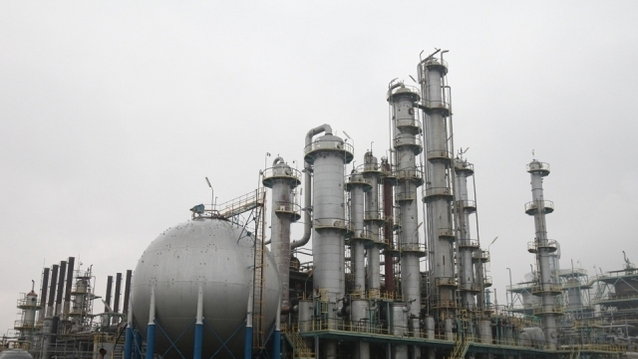
“Arpechim has been closed for three years now. We will continue to preserve the facility until we get the demolition permit, if no buyer comes forward. I’d love to have a buyer,” said Mariana Gheorghe, Petrom’s chief executive officer during the news conference announcing the financial results for 2012, a record year for the company.
Tearing down Arpechim would be the end of Oltchim, a plant struggling with insolvency, because its business is 70% reliant on PVC production, which requires ethylene from Arpechim, supplied via underground pipelines connecting the two facilities.
The closing of Arpechim rendered Oltchim unable to operate at capacity; losses piled up afterwards and the company went insolvent early this year.
Ethylene, however, is only a residual product for the Arpechim refinery, which Petrom closed because of its losses.
“If we don’t make a move, if we don’t come up with a proposal, what can we expect Petrom to say? ‘Come up with a proposal, will you?’ What should the Economy Ministry do, when it is powerless, when it no longer has any control over Energy and Environment [Ministry]?” said Petre Ianc, former general manager of the Industrial Policy Department of the Economy Ministry, on Thursday.
“They all, the Economy, Energy, Environment, Finance and Labor Ministries need to sit down and talk to save Oltchim (…) We need to be willing and know how to bring companies that have the financial strength to take over this Arpechim-Oltchim-salt mines integrated project, the ethylene pipeline between Oltchim and Arpechim, for a business that may generate EUR3 billion.”
Arpechim had a 3.5 million ton yearly refining capacity, about half of Petrom’s refining capacity.
Out of ten refineries in operation in 1989’s Romania, only three are still in business today: Petrobrazi, owned by OMV Petrom (SNP.RO), Petrotel Lukoil, owned by Lukoil and Petromidia, the core asset of the Rompetrol group, controlled by Kazakh state-run KazMunayGas. The total processing capacity went down from about 23 million tons to about 12 million tons in the meantime.
OMV, the majority shareholder of Petrom, got Arpechim bundled with Petrom in the privatization of the latter and never actually needed it.
At the time of Arpechim’s closing, Petrom officials said that besides the basic economic issues – a small inefficient landlocked refinery, the industry as a whole was going through a difficult time worldwide and many refineries had been or were about to be closed in Europe, after failed attempts to sell them.
(English version by Loredana Fratila-Cristescu)