
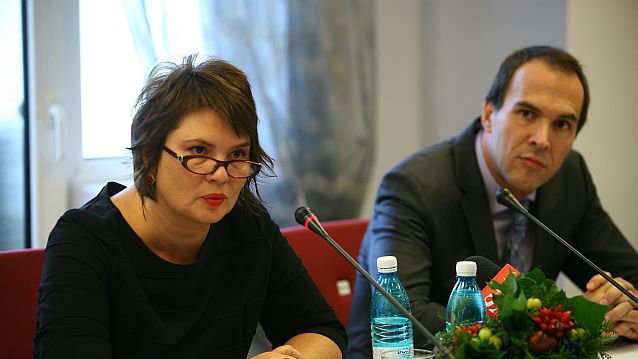
“We understand the short-term need to control medicine consumption, but we are concerned that this does not give us an element we seek in business, predictability,” AmCham president Alexandra Gatej told a news conference Tuesday.
U.S. companies present on the Romanian pharmaceutical market include Pfizer, Merck Sharp&Dohme and Eli Lilly.
On the other hand, Pascal Prigent, president of the healthcare working group within AmCham and general manager of GSK Romania, said the current clawback mechanism is not sustainable, and it does not allow investors to make plans for Romania.
“We are prepared to sign a check, but we are not prepared to sign a blank check,” Prigent said.
Through the clawback mechanism, the state taxes medicine producers for any increase in consumption above a budget approved in the beginning of the year. Thus, the government stops discounting budget overshoots with free and compensated medicine, which occur every year and impose budget corrections.
The tax is in fact a percentage applied to all companies selling medicine included on the free and compensated lists. Starting from the difference between the spent budget and the planned one, the government will calculate a quarterly percentage applied to the sales generated by compensated medicine.
All companies pay this tax, regardless of their sales.