
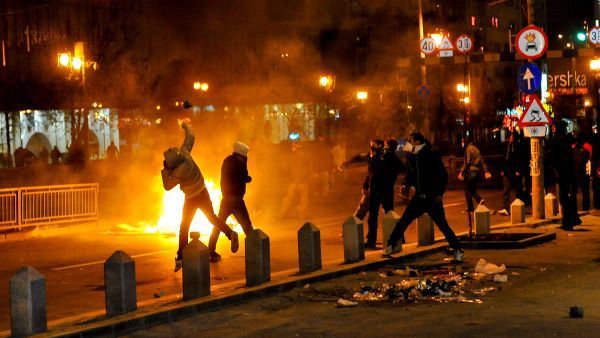
Tour operators argue that the violent protests in Bucharest’s downtown affect Romanian tourism’s image at a critical time, as Europe is the host of tourism fairs where contracts are signed and brochures given out.
“I am at the tourism fair in Stuttgart right now and everyone is asking what’s going on in Romania. It was the same thing yesterday, at the fair in Vienna. This violence is the last thing we need; we have a poor image in Europe as it is,” said Gheorghe Marginean, owner of tour agency Karpaten.
He warned that there is a precedent of tourism affected by street violence, set last year in northern Africa, and Romania could be in a similar situation.
“The market is very sensitive to this sort of thing and we will lose part of the foreign tourists. [Partners] in southern Germany are already asking me about the situation in Romania,” Marginean added.
The number of foreign tourists coming to Romania this year will be affected anyway by the deteriorated economic conditions in several European Union member states, Gheorghe Fodoreanu, owner of Invitation Romania Travel, believes. Add the violence in Bucharest and the negative effects will be increased.
“Any negative public event in a country, from bird flu to floods, earthquakes or aircraft crashes, will immediately damage the destination’s reputation. No one wants to vacation to a place with security problems,” he said. French, Belgian, German and Nordic tourists are the most sensitive to negative events affecting a tourism destination, Fodoreanu added.
According to the agencies, tourists who give up on Romania may turn to the Bulgarian coast or cultural circuits in places like the Czech Republic and Italy.
Corina Martin, president of the National Tour Agency Association (ANAT), believes that, if the violence were to stop now or in the next few days, the impact on the number of foreign tourists this year would be no higher than 10%.
In the first ten months of last year, Romanian and foreign tourist arrivals and overnight stays rose by 5.9% and 12.2%, respectively. Six million tourists stayed in Romanian hotels and inns during that time; about 1.3 million were foreigners.
The protests began peacefully last week, as a show of support for Dr. Raed Arafat, who resigned from the Health Ministry over his opposition to a new healthcare bill.
Small marches in support of Arafat and criticizing President Traian Basescu and the Government had taken place in various cities on Thursday and Friday. Eventually, the protests turned against the government’s policies – cuts in salaries and welfare benefits, higher taxes – as well as the widespread corruption.
There were scuffles between protesters and security forces in the University Square Saturday and Sunday evening. Some demonstrators threw stones or firecrackers, and gendarmes answered with force, in some cases using tear gas; 29 people were detained for violence Saturday.