

The largest storage facilities for sunflower are held by US company Cargill (615,000 tons), French-held Expur Urziceni (255,000 tons), Portuguese-held Prutul Galati (150,000 tons), as well as by Romanian-held companies such as Prutul Galati (255,000 tons) and Ardealul Carei (138,000 tons).
The storage facilities held by vegetable oil producers protect their profit because they defend against the price increase of sunflower every spring. They are also the ones that offer oil producers the security of signing contracts with major retailers, to make sure their companies will supply products on a steady basis and in the requested amounts.
“Silos are very important for an oil producer because the producer can buy raw materials for storage and does not depend on another company when it buys. Secondly, these facilities are important when outlining the company’s strategy every year,” explains Viorel Zichil, general manager of Ulerom Vaslui, one of the top ten players on the vegetable oil market.
For oil producers it is very important to have a network of silos if you consider that last year’s sunflower harvest, of around 2 million tons, is worth around EUR700 at present.
But right after the harvesting, in the second part of 2011, prices were almost half what they are now because of the wave of sales by small producers.
At stake for silos is buying sunflower cheap
It is precisely with a view to cheap acquisitions that local oil producers have set up silo networks.
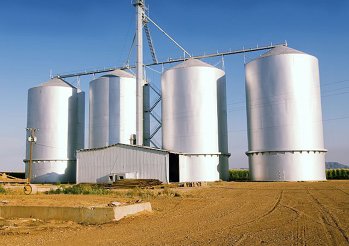 “We take the raw material from the silo’s gate and don’t pay the transport from the field to the storage facility. This is where the cost cuts come from,’ Zichil adds.
Ulerom Vaslui, a business held by Adrian Porumboiu, operates silos with an overall capacity of 61,000 tons, but the producer also takes over raw materials from the silo network of Comcereal, another company in the Racova Pan Group, held by Porumboiu.
Vasile Leu, former general manager and shareholder of Argus Constanta producer, explains in turn that the silo networks are profit generators for producers because of the cheap acquisitions and are an “open door” to signing contracts with major retailers.
“Silos help form the profit and offer security over the course of the year because it is very difficult to sign contracts with major retailers unless you can supply products on a steady basis and in the requested amounts,” Leu says.
Silo at the plant’s gate and near farmers
Another determining element in the strategy of oil producers is the placement of storage facilities. Local producers have silos at the plant’s gate and in areas where the major sunflower producers are.
For instance Prutul Galati producer, a business of over EUR60 million a year, has a plant in Galati, but also operates silos in Iasi (43,000 tons), Dolj (15,500 tones) and Botosani (2,500 tons).
Similarly, Ardealul Carei, a company that operates a Plant in Carei, Satu Mare county, also holds silos in other western Romania counties.
The local vegetable oil market, valued at EUR350-400 million, is shared by multinational players such as Cargill, Bunge and Expur, as well as by local entrepreneurs such as Prutul Galati (Marian Andreev), Ulerom (Adrian Porumboiu) and Ardealul Carei (several individual shareholders).
(English version by Daniela Stoican)