
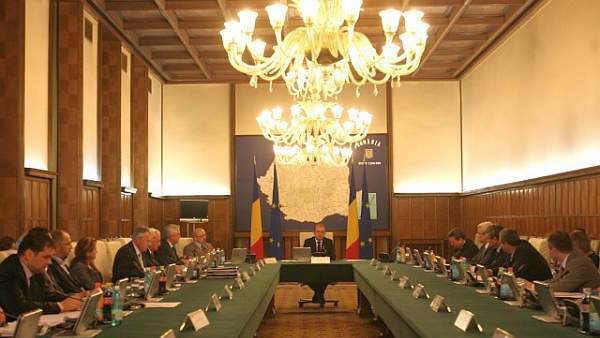

ZF estimated the ministers’ wealth based on an evaluation of their assets: land, buildings, cars, bank deposits, jewelry and rent income, from which the debts reported by each minister were subtracted. The information is sourced from the personal financial disclosure statements for 2010 submitted by each minister (with the exception of Sebastian Lazaroiu, the new labor minister, who has yet to submit his updated financial disclosure statement) in June this year and published on the Government’s website.
The real estate valuations used in the analysis are rough estimates and are based on average prices at which properties are traded (between EUR500/square meter in a smaller city and up to EUR1,500/square meter for homes in Bucharest’s sector 1, while cars were valued based on prices asked for similar models on specialized websites.
How come employees who worked almost their entire life in the public sector, where their basic wage never exceeded EUR1,500/month, have managed to amass such wealth?
“The answer is quite simple: they almost certainly did business, and their companies were profitable even before the former became dignitaries. The financial disclosure statements that ought to be checked are those filed with the fiscal authorities, not those submitted to the Parliament, because they also include dividend income and royalties,” believes professor Vladimir Pasti, sociologist and political scientist, who specializes in the study of political and social developments of the Romanian transition.
“Any inquiry that would be launched into the wealth of these people would find that their amassed wealth is justifiable because no sane person would declare unjustifiable wealth to the authorities,” he adds.
The amounts could be much higher if all income collected by dignitaries was to surface, experts say.
“It would be interesting to see how many of the former and current dignitaries have bearer shares in companies, how many used complex procedures to transfer businesses to people close to them, and are actively taking part in money laundering,” says Dan Ionel Blanculescu, a consultant within consultancy and financial investigation company Consultanta si Investigatii Financiare, formerly minister of Control within the Nastase cabinet.
| Minister | Ministry | Assets (euros) |
| Gabriel Oprea | National Defense | 2,500,000 |
| Elena Udrea | Regional Development and Tourism | 2,000,000 |
| Daniel Funeriu | Education | 800,000 |
| Catalin Predoiu | Justice | 600,000 |
| Valerian Vreme | Communications | 400,000 |
| Laszlo Borbely | Environment and Forests | 300,000 |
| Sebastian Lazaroiu | Labor | 250,000 |
| Ion Ariton | Economy | 250,000 |
| Gheorghe Ialomitianu | Finance | 200,000 |
| Cseke Attila | Health | 150,000 |
| Traian Igas | Administration and Interior | 120,000 |
| Anca Boagiu | Transport and Infrastructure | 100,000 |
| Emil Boc | Prime Minister | 100,000 |
| Kelemen Hunor | Culture | 100,000 |
| Teodor Baconschi | Foreign Affairs | 80,000 |
| Valeriu Tabara | Agriculture and Rural Development | 80,000 |