
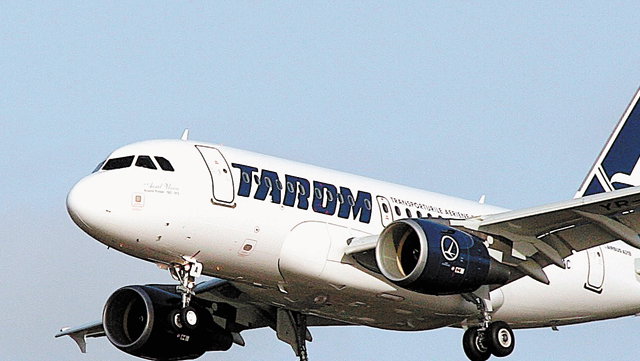
The goal Tarom’s management undertook to attain was to boost the number of passengers by 100,000 every year for a total of 2.6 million by 2016.
At the same time, the number of employees only decreased by 2.8% even though the management plan had set the personnel cutbacks at 10% by the end of last year.
The 2013 financial results (revenue and profit) of the company have not been published yet because the audit is not over. The management plan the board of directors approved in March 2013 provided for 143 million lei (EUR32 million) losses last year, RON18 million in 2014 and profit in 2015 and 2016.
“We are on schedule with the management plan, the goals have been attained,” said Christian Heinzmann, chief executive officer of the company, who earns EUR10,000 in net amount per month, said last October.
Tarom is the first state-owned company to get a private sector manager in November 2012. Only a year later, the then Transport Minister Ramona Manescu dismissed the entire board due to the conflict between them and the CEO of the company, Christian Heinzmann, who kept his position.
A new board was appointed and new changes were made six months down the line.
Tarom did not post profit in 2008-2012, accumulating EUR250 million losses. It also lost the leading airline position.
Its main rivals, though, increased their passenger numbers. Lufthansa, for instance, carried 18% more passengers on the Romanian market last year, for a total of 1.3 million. The group expects to carry 1.5 million this year. The company introduced two flights from Sibiu to Munich per day instead of one, and added more flights to the Timisoara-Munich and Bucharest-Vienna routes.
Low-cost airline Wizz Air saw an increase of 18% in passenger numbers to 3.2 million, after launching new flights to and from Romania.
(English version by Loredana Fratila-Cristescu)