
The only ‘threats’ are now coming from Morocco, where Renault invested in another Dacia plant or India, from where more and more carmakers are importing cars for the European market, he added.
“The Czech Republic and Poland are no longer our rivals. We’re all alone now. Romania is the last geographic area of interest in the European Union for investors in this industry. Romania still has a huge untapped potential in the automotive component industry. (…) The potential is in the western part of the country, as the lack of infrastructure generates huge logistics costs in the eastern part,” Constantin Stroe said on ZF Live on Thursday.
What he means is that wages in Poland and the Czech Republic are close to those in the West, which makes the two countries no longer as competitive for attracting new investors as they once were.
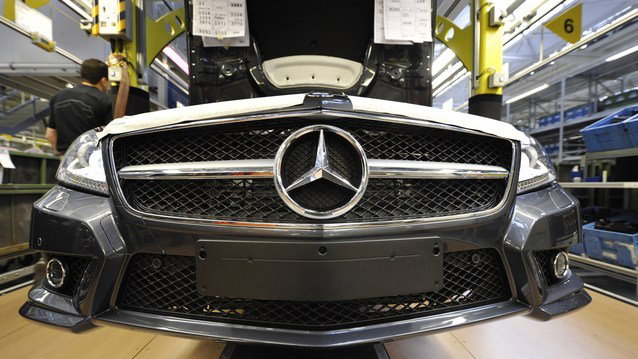
The biggest new investment attracted by Romania is Daimler’s, through its local unit Star Transmission. It will invest EUR300 million in a new plant in Sebes to make the next generation automatic transmissions for Mercedes-Benz cars, the largest investment by an automotive component manufacturer in Romania in the last few years.
“Daimler’s decision to invest in Romania is an extraordinary gain for the country’s economy. It’s a magnet that will attract others,” Constantin Stroe said.
Daimler assembling transmissions in Romania, the most important and complex subassembly of a car, will improve the country’s competitiveness in the coming years, Stroe said.
On the other hand, wages in the local industry are unlikely to increase as a result of the investment.
“If the average wage in Romania were to increase as a result of this investment, the reason why they came to build the plant here will no longer exist. Average workforce cost is EUR4.7 per hour while in Germany it is EUR34 per hour,” said Constantin Stroe, who is also vice-president of Dacia.
“Other things are considered here, as well: productivity per employee in the automotive industry of Romania. We are doing very well in terms of number of employees compared with Central and Eastern European countries, but very poorly when it comes to productivity, to professional training.”
Although foreign investment in 2011 and 2012 stood at only EUR1.2 billion to EUR1.3 billion, Constantin Stroe is optimistic about investors regaining trust in the country.
“Were it not for the foreign investment in its automotive industry, Romania would have been gone from the car manufacturing map of Europe for good,” Stroe said.
The automotive industry contributed EUR12 billion as turnover in 2012, two thirds of which from automotive component manufacturing. The Romanian automotive industry is currently employing more than 140,000 people.
(English version by Loredana Fratila-Cristescu)