
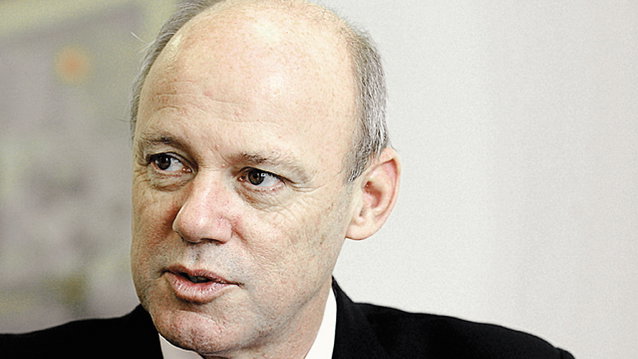
Stead, 55, has recently informed his collaborators in an email that he had decided to leave the company, which raises questions over the manufacturer’s situation.
After his departure, information that Advent were planning to sell the company appeared on the drug market. Neither Advent nor representatives of Labormed commented on the information and there is no public information on the drug producer’s current management.
“We managed to successfully integrate the portfolio acquired and introduced many new products that strengthened the portfolio. We were able to triple the sales and EBITDA in 3 years using the portfolio at hand. We transformed Labormed from a small unbranded business with mainly unbranded generics into a branded company with a strong identity and one which spanned RX, OTC and supplement sectors, operating regionally,” Stephen Stead said.
In the whirlwind of over 300-day payment terms
Stead became manager of the company in March 2008, shortly after Labormed was bought by investment fund Advent International, in an over EUR120 million transaction.
Previously he had run the largest drug manufacturer in Poland, Polpharma, after being CEO of another Romanian company, Terapia, during the time when it was owned by Advent International.
A year after Stead became CEO, Labormed made two acquisitions: Ozone, for around EUR25 million (according to ZF data, though the amount was not confirmed by the company) and a portfolio of brands from PlantExtract, both of which occurred in 2009. This significantly boosted the number of products, especially non-prescription drugs and food supplements.
“In the second phase we were able to successfully defend the company from the perfect storm of long payment terms, increasing competition which put incredible pressure on margins (…) as well as the imposition of the claw-back tax. (…) Me and my team had a tough time managing the business without further financial support from the stakeholders yet continuing to meet the challenges of a large company operating in the Romanian pharma market.”
He also says during this time he has had to deal with payment terms in excess of 300 days, as the company had to pay its suppliers.
There is no public data on Labormed’s results last year, but in 2010, it posted turnover of 129.74 million lei (EUR30.8 million) and losses of RON39.46 million (EUR9.37 million), according to data on the Finance Ministry website.
Labormed’s operations abroad are not included in these results. The company had cumulated turnover of around EUR70 million, according to previous information. Labormed also has operations in Poland, Bulgaria, Hungary, the Czech Republic, the Republic of Moldova and Azerbaijan, Belarus and Malta.
Why did he leave the company?
“When you and your team are delivering well and better than your peers, and against overwhelming odds, but it still is not enough to overcome the difficulties facing your business or satisfy the different stakeholders in the business, then it’s time to look for a different challenge rather than continuing to do the same.”
He adds that he has no specific plans for the future, but that he prefers the operational environment rather than consultancy and that he is planning to return to the sector.
(English version by Daniela Stoican)