
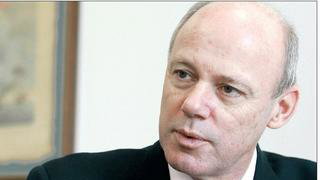
“There’s growth but there’s neither profit nor cash. We sell more but make less,” Stead told Ziarul Financiar in an interview.
He says, however, that the company does not want to reduce sales and lose market share and visibility, but this is getting harder and harder to do. “We can only look at profitable products and drop the less profitable ones.”
What he means is that the current state of things in the drug industry with the very long payment terms, the trouble with getting back the money from the market and the new legislation is keeping managers on edge and giving them a headache.
The company posted about EUR70 million sales last year and budgeted over EUR80 million for this year. Its product portfolio includes both prescription drugs (Trimetazidina LPH, Indapamid LPH, Enalapril LPH) and over-the-counter drugs (Eubiotic, Entran, Trachisept, Imunogrip).
OTCs currently generate 35% of the sales; Labormed seeks to increase the percentage to 45% next year.
Stephen Stead, 54, took the reins of the company in 2008, only a few months after investment fund Advent bought it in an over EUR120 million deal.
He is one of the best-known executives in the pharmaceutical industry after having run drugmaker Terapia from 2004 through 2006 and having served as the chief executive officer of Poland’s largest pharmaceutical producer Polpharma from 2006 through 2008.
The Health Ministry in October started enforcing a pharmaceutical industry tax that had been around since 2009 but not levied because of certain legislative ambiguities. The clawback tax, as it is called will have the government charge producers for any increase in the consumption of free and subsidized drugs that results in overruns of the budget approved at the beginning of the year. Such overruns occur every year and require budget adjustments to address.
All producers are unhappy with how the tax was devised and say they will have to bear the increase in consumption in full.
Stead say the tax is a problem for the entire industry, as it is implemented even though there is no control over what doctors prescribe and there is also a severe lack of funding.
Under the circumstances, Labormed’s chief executive says he has to find ways to deal with the long payment terms and does not know what to answer to banks, which can provide funding, when asked about the clawback.
As a result, Labormed, which ranks 16th among pharmaceutical companies (along with Ozone, which it bought in 2009), will focus on profitable products and some of the brands will be discontinued.
The acquisition of Ozone two years got Labormed a presence in countries such as Poland, Czech Republic, Hungary and Bulgaria, which currently contribute 10% of its sales. Although the company had initially planned to focus on the markets abroad, as well, they are not powerful enough to help the business in Romania, affected by cash troubles, for the time being.
“We decided it was more important to perform on the Romanian market. We don’t see ourselves as a company that suddenly starts to grow on the central and eastern European markets because they’ve changed in the last three years. It wouldn’t make sense, financially,” the manager added.
Which is why Stead says that if he had to choose between Poland and Romania to spend the money, he would chose Romania first.
(English version by Loredana Fratila-Cristescu)