
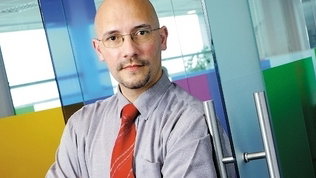
The project of the Finance Ministry is good, but only for multinationals that open service centers because Romanian companies cannot create this many jobs under the current economic circumstances, Daniel Ionescu, marketing and strategy manager of TotalSoft, one of the largest players on the software market, told ZF.
“The initiative to subsidize the creation of jobs in a strategic sector should have been taken a long time ago. The fact that this involves 300 basically eliminates Romanian companies from the scheme,” he says. “I doubt that top-three multinationals want to increase their personnel by such high numbers.”
But while multinationals have the advantage of creating service centers, which can serve other countries, for a Romanian company the number of jobs is correlated to market demand.
“Under the current economic circumstances I don’t think there are Romanian companies that target 300 additional jobs,” Ionescu said.
TotalSoft, which had turnover of EUR22 million last year, up 21% on the previous year, had 495 employees at the end of last year. TotalSoft is controlled by Greek investment fund Global Finance.
On the other hand, Siveco – the largest locally-held software producer, with EUR67 million in turnover last year, currently has around 1,200 employees, about 400 of whom were employed in 2011.
Some of the largest employers on the local IT market are the Romanian subsidiaries of US IT giants Hewlett-Packard (HP), Oracle and IBM, which in the last few years have reached thousands of employees in service centers opened in several cities across Romania.
The scheme of the Finance Ministry could in fact help IBM choose Romania for its planned service center with up to 3,000 employees, according to market information.
The project proposed by the Finance Ministry favors call centers, so a support scheme for software products developed 100% in Romania would also be necessary, Daniel Ionescu adds.
Conditions proposed by the Finance Ministry are not that strict, says on the other hand Valentin Tomsa, general manager of the local subsidiary of German software developer SAP, which last year opened a consulting center that could hire 400.
“Eligibility criteria are not tough, as long as companies that ask for such incentives have a sustainable business model, and the creation of 300 jobs is part of a medium-term investment plan, which is the case of SAP.”
(English version by Daniela Stoican)