
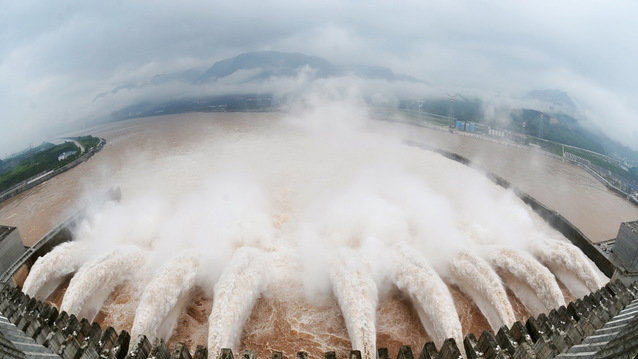
The construction of two new reactors of the Cernavoda nuclear plant should have started in 2010, but most of the investors interested in it pulled out and the costs of investment have soared from EUR2 billion in 2007 to almost EUR6.5 billion. The Tarnita hydropower plant, a EUR1 billion project, was first discussed before 1989 and even though the project company should have been selected in 2012, investors did not show any interest in it.
From exporter to importer
The problem is that Romania’s energy system has gone through profound changes, the most important of which is the start of green power generation. Afterwards, the system has been subjected to significant daily fluctuations and in the absence of capacity to regulate it, use of thermoelectric and hydropower plant has increased, and costs became higher too.
Moreover, a large part of Romania’s generation facilities is past is service life. With harsh drought in the last two years and a system that has been neglected for two decades, Romania ended up importing electricity in 2012, which is unusual for a country that is a net power exporter.
The major companies in the energy business, which the Romanian government is trying to lure to its projects say big investments are a thing of the past and what is needed now is a more flexible approach.
“It’s difficult to pick from among such big projects,” says Eric Stab, president of GDF SUEZ Energy Romania, which was among the members of the project company for reactors 3 and 4 of Cernavoda, but backed out.
Stab says he believes small steps are better, especially given the crisis. The countries that managed to revitalize their energy generation sectors are those that made several investments options in various technologies available to investors.
Investments needed today, not tomorrow
The major players in this industry believe that the crisis has rendered big energy projects very difficult to finance. They also believe addressing the situation Romania’s energy system is in can no longer be delayed.
Any nuclear power project in Europe has seen prices surge after Fukushima, but the main problem here is finding investors, said Luca D’Agnese, chief executive officer of Enel Romania, which is still part of the project company of reactors 3 and 4 of Cernavoda, along with ArcelorMittal Romania and the country’s government represented by Nuclearelectrica.
Such projects need to be looked at from a different perspective. The market is not favorable to large investments. Romania needs a diversification of the project mix because of many renewable energies projects entering the market. Smaller, more flexible gas-powered facilities are needed and major investments will not happen any time soon, Luca D’Agnese added.
Tarnita is a good project in terms of flexibility but no so good in terms of timing, because it will take ten years to complete. The question is not what Romania will do in 2013, but in 2017, therefore such projects are not the answer. Something smaller will probably be needed, Enel Romania’s CEO believes.
Enel is also involved in two major projects in Romania besides Cernavoda nuclear power plant, the building of two coal-powered thermoelectric plants in Galati and Braila. D’Agnese said Enel might back out of these projects, though.
Any solutions?
A solution would be, the representatives of the major European companies operating in Romania say, support schemes for conventional energy, too. As green power received help to take off from one of the most generous support schemes in Europe, major conventional energy projects could receive support, too.
“The way I see it, certain support schemes are needed, otherwise big projects won’t take off,” believes Frank Hajdinjak, CEO of E.ON Romania, an electricity and natural gas supplier and distributor with over EUR1 billion in revenue.
Another idea would be to create a capacity market. This means building facilities, mainly running on gas, capable of going online and back on stand-by when the system needs it to balance the fluctuations of renewable energy.
Support for such projects should not necessarily come from subsidies but rather from rewarding the capacity, not necessarily the power generated, the reserve, the security of the system, says Enel Romania’s CEO.
Such projects would not recoup the investment from sale of electricity alone but mainly from long-term contracts stipulating their use for balancing the system as needed.
The statements were made during the ZF Power Summit 2013.
(English version by Loredana Fratila-Cristescu)