
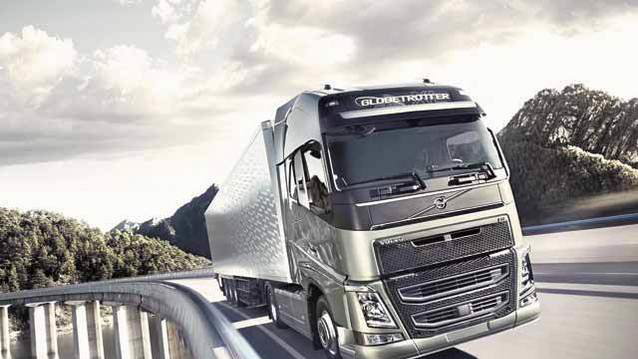
Despite the advance, Romania lost one spot in the ranking of EU countries by sales and dropped to 17th place behind Lithuania, where sales rose 24% to more than 3,400 units.
“One of the factors that influenced the market is the low personnel cost in Romania. Some of the international carriers operating abroad choose to buy fleets in Romania because of the lower workforce cost here,” said Diana Mantu, marketing manager with MHS Truck&Bus, the importer of MAN trucks in Romania part of the Automobile Bavaria group of businessman Michael Schmidt.
“Lenders too, have been signalling they are more open to funding purchase of trucks and carriers expect their future investments to improve a lot.”
These factors can lead to an increase in the number of trucks registered in Romania on a market that should see about 9,000 units sold each year under normal circumstances, Diana Mantu added. “We had better results before the crisis and are now experiencing revival on this segment.”
Romania’s competitive edge
“Romanian carriers have a competitive edge in terms of lower workforce costs and lower tariffs,” says Sigur Wandel, managing director of Volvo Group Trucks Romania.
This drove expansion of local companies to the West and the opening of Romanian branches of Western companies that bought trucks from this country, he added.
The high average age of the trucks in Romania prompted the need to renew the fleets, as did the pre-buy effect for the Euro 5 trucks (buying Euro 5 trucks before the requirement to register only Euro 6 trucks becomes mandatory i.e.), which helped the 2013 results, Wandel said.
The average age of commercial utility vehicles is 12 years in Romania, while the average age of cars is 14 years.
Refresh, not expansion
MAN sold fewer trucks to customers looking to expand fleets than to customers looking to refresh them. Therefore 80% of the sales to carriers were refresh sales and only 20% expansion sales.
“1,400 heavy trucks were registered in the last quarter of 2013. This may be the effect of the attempt to buy Euro 5 trucks before the requirement to register only Euro 6 vehicles becomes mandatory,” Mantu said.
It may also be because some companies that needed trucks postponed the decision to buy until after they could make sure they would keep lucrative contracts for next year, she added.
On the other hand, Volvo Trucks Group estimates 40% of the trucks it sold went towards fleet refresh programs and 60% towards expansion plans.
Alex Pop, marketing manager of EVW Holding, DAF importer in Romania, says 30% of the trucks sold went towards fleet expansion and 70% towards fleet refresh programs.
HIgher expectations for 2014
“We expect 2014 to be better than 2013 and sales could reach 5,000 new trucks. As for MAN estimates, we set out to reach 20% market share, with 1,000 new trucks delivered in Romania,” MHS Truck&Bus marketing manager said.
Volvo Trucks boss said there was indeed a Euro 5 pre-buy effect at the end of 2013 but the shift to Euro 6 was much smoother than initially expected.
Romanian carriers no longer think short-term only, Wandel said, so they did not consider only the higher purchase price of Euro 6 trucks but also their higher resale value. In addition, orders for Euro 6 trucks for 2014 were higher than those for Euro 5 trucks in 2013, he added.
“The increase of the over 6 ton truck segment is a positive signal for the economy,” said Ovidiu Pintilie, sales and marketing manager of Mercedes-Benz Camioane.
(English version by Loredana Fratila-Cristescu)