

The announcement was all the more surprising since the economic growth forecast is in the process of being revised downwards, and an increase to the public salaries would mean that the state would spend almost half a billion euros more than it had budgeted. If the economic growth is reduced, which entails lower budget revenues, the Government needs to think where to cut spending in order to be able to make the wage increases.
Economic analyst Aurelian Dochia notes a contradiction between what president Traian Basescu announced on Sunday night, a downward revision of the economic growth target to 1.5%, and talking about raising wages and pensions just one day later.
“There is a contradiction there, but this is an election year, there are street demonstrations. If we take the good part of the announcement, things are now being discussed along the lines of “if it is possible.” Given that Romania has an arrangement with the IMF, increasing the set budget deficit, which is already very tight at 1.9% of GDP, is out of the question, he says.
“It is rather a question of restructuring spending. Unless new resources are found, and it is hard for them to be found given that the official growth forecast (around 2%) will be hard to reach, money will be taken away from investments and allocated for wages, which would be a great shame.”
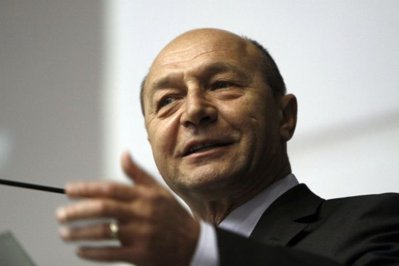 President Traian Basescu warned on Sunday about the danger of adopting populist measures.
The unexpected announcement about increasing the minimum wage and pensions by 5% amid pressure from the ruling coalition, raises question marks over the ability of the state and of private employers to go through with such a measure.
The prospective increase in the minimum wage also affects private employers who pay the minimum wage (currently 700 lei or EUR161) to over 600,000 employees – who should themselves take over EUR80 million out of their pockets, either by recalculating wages or by firing staff in order to keep within the budget.
On Monday, in a surprise move, PDL first vice-president Sorin Fruzaverde, announced that prime minister Emil Boc was awarded a mandate by the management of the ruling coalition to negotiate with the IMF an increase in wages and pensions as of April.
He gave assurances that there was money in the budget for these increases. At the same time, the IMF was at a seminar with the trade unions. Jeffrey Franks, head of the IMF’s review mission in Romania, said “if the minimum wage increases, employers will hire fewer employees, so a balance needs to be found.”
But analysts say the implementation of these measures could lead to layoffs or to wage cuts, because this would amount to spending not provided for in the budget adopted at the end of last year.
PDL leaders did agree back in the autumn of last year that wages of public sector workers and pensions could be raised in 2012 after the IMF’s April visit if there are no “major slippages” in Europe and in Romania in terms of economic growth.
However, the IMF has recently released a forecast, according to which the euro zone will record 0.5% economic decline.
The “price” of raising wages – half a billion euros
In the budgetary sector, the 5% wage increase would apply to all 1.2 million public sector employees, considering that they are paid based on the law of uniform pay, where the reference for calculating wages is the minimum wage.
Considering a salary budget of almost RON40 billion (EUR9.2 billion) in 2012 in the public sector, an increase of the minimum wage would mean an additional spending of almost EUR470 million for the state.
Over 660,000 private sector employees earned a gross wage of less than RON700 per month (the minimum wage), which means a 5% increase in the minimum wage would require employees to find another EUR65 million to cover wage costs in 2012.
“In the private sector, budgets are drawn up in autumn, starting in September, when companies also decide whether a wage increase would be done or not. Although not many private sector employees are paid minimum wage, some companies could make layoffs or recalculate wages if a wage increase is implemented,” says Oana Datki, country manager of Consulteam, partner on the local market of human resources giant Mercer, which conducts a wage survey on the local market yearly.
What the Government says
Premier Emil Boc said on Monday, ahead of the Government meeting, that a slight wage increase would be considered in the public sector, as well as a pension increase, but the measures are conditional on stability and on economic growth.
What the IMF says
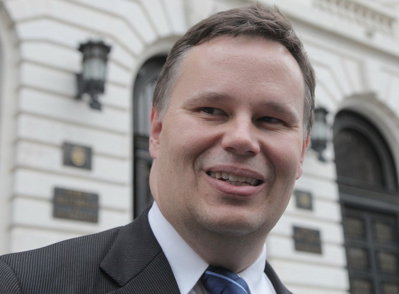 The statements of Jeffrey Franks, head of the IMF’s review mission in Romania on Monday in Parliament were also unexpected, considering that on his last few visits, he refrained from giving opinions about talks with government officials over the duration of the review.
Franks believes the minimum wage could see a “calibrated growth” this year, but warned that, if wages were to grow, employers could hire fewer people, and the increase in the cost of labor could potentially have unwanted effects in the economy.
“In Romania there is a need for policies that can generate economic growth and wage increases, a need for the education system to be improved, according to Franks.
“We have to be careful about increasing the minimum wage so as not to discourage hiring. (…) Once a minimum wage is set, the rest goes into informal economy. (…) We should not kid ourselves that once we increase the minimum wage, everyone will be happy,” Franks said. (EUR1=RON4.334)
(English version by Daniela Stoican)