
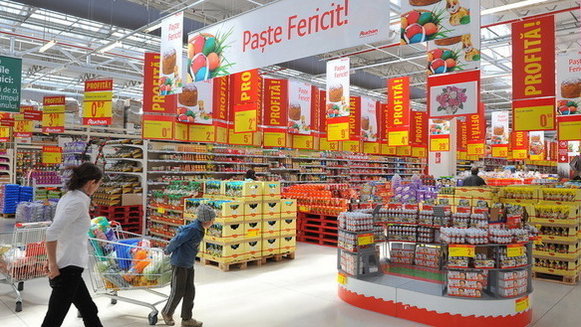
This year, the budget earmarked for Easter shopping is on the rise as the money allocated is spent both for Easter shopping and for May Day shopping because the two dates are close this year.
“This year sales in the month running up to Easter are ten percent higher than in the Easter month last year. They account for around 8.5% of the overall sales in a year,” says Sabin Fane, marketing manager of the Billa supermarket chain of 72 stores. Billa sells mainly food, but in the case of hypermarket chains the share of Easter month sales to overall sales could be higher because they have a much more extensive product range and customer traffic is much higher.
On a modern retail market amounting to EUR8.5-EUR9 billion per year (the sales of the 12 chains that make up the market), if the Easter month accounts for around 8.5-10% of sales, it results that Romanians spend between EUR750 million and EUR850 million in the month running up to Easter, according to ZF calculations.
ZF estimates take into account the sales of cash & carry chains, hypermarkets, supermarkets and discount stores.
Although the Easter holiday comes with higher traffic for hypermarket chains, chain representatives say a high number of customers does not necessarily mean similarly high sales.
“Considering that Romania is not out of crisis yet and that people tend to buy only strict necessities, we are not very optimistic about sales this year in the Easter period,” say representatives of Kaufland, the largest player in modern retail. However, traffic is significantly up.
“The Easter period, just as the Christmas time is a peak time, when traffic increases by up to 35% and the food items bought are those specific to this period.”
Lidl representatives say the products with the highest sales in this period are traditional ones, such as traditional cake and lamb-based products. But company representatives do not provide sales estimates.
Similarly to Kaufland officials, Carrefour representatives say so far the run-up to Easter is similar in terms of sales to the Easter period of last year. “But sales are 50% higher than in a regular period,” says Andreea Mihai, marketing manager of Carrefour, which has three store formats – hypermarkets, supermarkets and convenience stores.
Sales in traditional retail will add to those of modern retail chains, with traditional retail – independent convenience stores – accounting for 50% of the total.
Romanians in urban areas have an average budget of 540 lei (around EUR125) for Easter and May Day, according to a survey of market research company MEDNET Marketing Research Center.
Information provided by retail chains shows that even after four years after the start of the financial crisis, spending is not showing major signs of rebound as Romanians continue to be cautious spenders.
(English version by Daniela Stoican)