

Meanwhile, Romania has seen emerging more than 60 large shopping centers with an area of almost 3 million square meters, spaces where Romanians spend around EUR4-5 billion annually, according to ZF estimates that take into account an average sales level of around EUR1,500/square meter annually.
Malls are now not just commercial destinations, but also leisure spaces, with cinema halls, playgrounds and restaurants being other “anchors” that attract over 300,000 people to Bucharest malls alone.
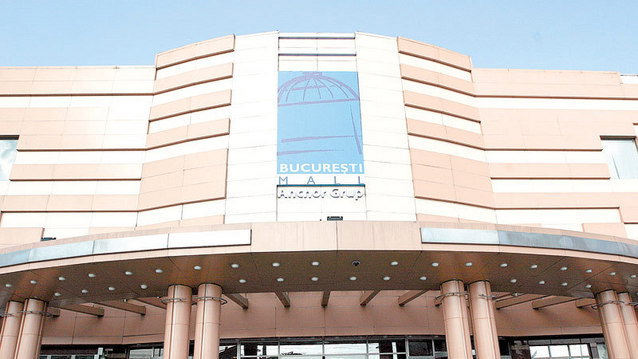
Around EUR100 million enter annually the accounts of stores in Bucuresti Mall, a project with a 40,000-sqm rentable area that has undergone gradual refurbishment since May. The process is an “open door” one, so that the mall is still appealing to clients, in the context where competition in the city is ever fiercer.
“Tenants’ average sales are above the level of EUR2,500/sqm annually, I cannot tell you the exact figure, but we also have stores with sales of EUR10,000/sqm. In the first two quarters, we saw sales go up despite the revamping process,” stated Cristian Costache, who has run Bucuresti Mall as center manager since 2013.
According to Anchor Group representatives, the mall of Vitan had 166.8 million clients in the 15 operational years, namely an average of above 30,000 people daily, and Costache states the level maintains today.
However, store logos have changed after, on the rising purchasing power and mall development, international retailers such as H&M, Zara, Mango or Marks & Spencer have expanded in Romania and rented spaces inclusively in Bucharest Mall.
Still, the mall of Anchor Group needs to be brought up to the current standards imposed on the retail market, the more so as two new malls are under construction in the eastern area of the city. Each of the two malls has an area almost double the one of Bucuresti Mall.
Thus, the group run by Turkish magnate Husnu Ozyegin, who also controls Credit Europe bank, earmarked EUR26 million for the refurbishment of Vitan mall, as well as of Plaza Romania project of Drumul Taberei, opened ten years ago by the same Anchor Grup.
“Unlike other investors that left Romania, we have stayed as we believe in the country, we believe in Bucharest and our projects. In the past 15 years, we’ve invested around EUR60 million in Bucuresti Mall and we’ll make further investments here. This autumn, we’ll also resume works for Anchor Plaza Metropol office building,” stated Yurdaer Kahraman, Global CEO Commercial Real Estate Properties at FIBA, the holding Anchor Grup is part of.
Works will be carried out gradually, especially at night. “Through this refurbishment, we are getting ready for the next 5-10 years. We definitely expect better sales. The number of stores will rise from 100 at present to around 115 and in the coming period you’ll constantly see new retailers opening shop in Bucuresti Mall,” added Kahraman.
The company that operates Bucuresti Mall generated revenue worth EUR12.8 million last year, against EUR19 million in 2009, the last year before the opening of Sun Plaza mall, which attracted a large part of the clients.
Gradually, each major district of Bucharest will have a mall and as purchasing power is stalling, more players will try to bite an ever bigger slice of the same pie, a reason why the mall market will still be highly competitive.
(English version by Catalina Apostoiu)