
The market of Moldova is becoming ever more appealing for luxury brands. How would a unified market of Romania and Republic of Moldova look like?
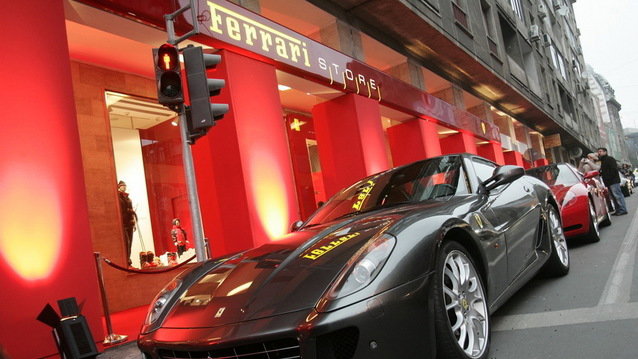
Should such a thing happen, the biggest impact would be on the luxury segment, where sales would rise by almost 60%. About 100 luxury cars were sold last year in the Republic of Moldova, and almost 170 units in Romania, judging from the sales figures of Aston Martin, Bentley, Ferrari, Lamborghini, Rolls Royce and Porsche brands.
“The high sales of luxury cars, such as Rolls-Royce, Bentley and Porsche, we are seeing in the Republic of Moldova are typical of backward countries where the are no middle-segment cars, because people there are either very poor or very rich and implicitly there are few people who can afford a middle-segment car,” said Nicolae Sorescu, head of the Radacini dealer network and one of the longest-standing executives on the local auto market.
“The best example in this regard is Moscow, where we can see more Ferraris and Lamborghinis than in the entire Europe.”
Sales of new cars in the Republic of Moldova amount to only a 15th of the new car sales in Romania, because of the very low incomes of the people in that country, half of what Romanians earn.
Sales of cars in the Republic of Moldova went up by almost 6% last year against 2012, to a little more than 4,400 units, equaling average sales in two counties of Romania. The Romanian market posted sales of 68,700 new cars last year.
Together, though, the two markets would go beyond 73,000 cars.
“Should we imagine unification of the car market, the sales of the Republic of Moldova would not have a major impact over the figure registered in Romania last year, at least at first. Only 13.7% of those who bought a car in the Republic of Moldova in 2013 opted for a new car, while in 2008 the share of such cars went beyond 40%,” said Constantin Mihalachi, editor-in-chief of Autostrada.md and a car market analyst in the Republic of Moldova.
“Hence, if things do not change, the desire of Moldovan clients of opting for a new car will not change, either, though they increasingly see the advantages of a new car”.
Last year, imports of used cars rose to almost 32,000 units in the Republic of Moldova, after the age requirements for the cars imported were lessened from eight to ten years.
On the other hand, while in Romania the ratio between new and used cars stood at one to four last year, in Moldova it reached one to seven.
“Speaking about imports of used cars, amid the European aspirations the government of Chisinau has, aspirations that could turn into our country becoming a EU member in the future, there are voices saying imports of these cars could go up even more. But this will happen only if Moldovans’ purchasing power does not rise in the coming years,” Mihalachi concluded.
(English version by Catalina Apostoiu)