
The restructuring measures decided for SNLO, one of the two state-owned mining companies, are included in a government document, obtained by MEDIAFAX, and were discussed with representatives of the International Monetary Fund in fall this year.
For this year, the government has decided to lay off 300 persons from SNLO, out of a total 8.985 employees.
Betweeen 1997 and 2006, the company laid off 21,156 people, and another 800 jobswere cut over the past two years.
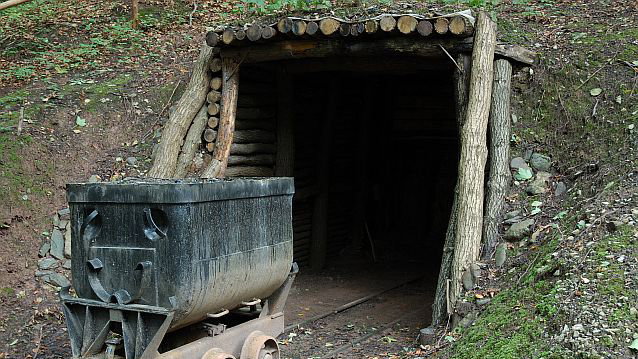
The strategy developed by the government for SNLO involves the continuation of layoffs in 2012 and the ceasing of underground activity until December 2012-March 2013.
An analysis performed by authorities reveals that output in three mines will decrease from 700,000 tons in 2009 to 300,000 tons in 2012, which shows that underground activity is running on loss, with a negative impact on the company’s revenue.
Underground worker numbers currently reach 1,345, but it should be decreased to 254 people by the end of next year.
Employees who have less than two years left until retirement will be sent into furlough, with pay reduced to 70%.
Positions created following direct employment starting 2007 will be restructured, and so will the positions of employees who received compensation from SNLO and were later rehired. In addition, restructuring will target employees who cumulate salary and pension.
Over the next few years, SNLO staff should be reduced by more than 470 people. A first batch, of 200 layoffs, has already been planned and will be performed by March 2012.
Other measures considered for SNLO are the labeling of SNLO as a national interest company, the renegotiation of price and volumes with the main beneficiaries, the conclusion of long term contracts with said beneficiaries, and the search of ways to price lignite on the bourse.
SNLO is Romania’s main lignite producer, with a 55% market share. The company provides coal for 20% of Romania’s electricity production, as well as thermal power for several towns.
The company will soon come under private management and it will be included in energy giant Oltenia, one of the two major companies envisaged by the government. Oltenia would then be privatized by the end of next year.