
The yield of 4 tons/hectare (grain) and 2.3 tons/hectare (oilseeds) keeps the country at the bottom of the EU ranking by yield, however, according to a ZF analysis of ten indicators of the main crops in Romania’s agriculture in 2014.
Romania ranks first by sunflower production in the EU and sixth in the world with its 2.1 million ton harvest, which accounts for 5.2% of the global harvest and almost a quarter of the EU sunflower harvest. Almost half of it is exported, while the rest reaches vegetable oil plants.
The season was a bumper crop season for the entire oilseeds market, since the 1.1 million ton rapeseed production was the highest ever, putting the country on the sixth place in the EU.
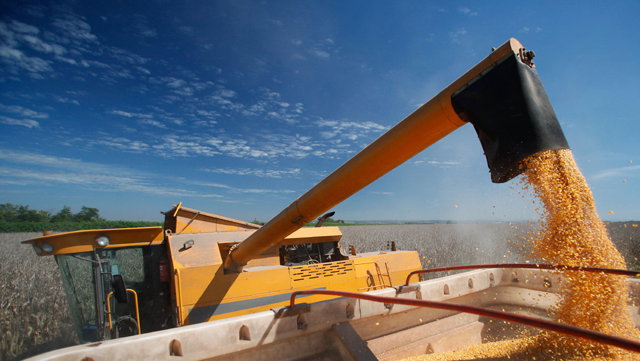
The abundant water supply also drove up the corn production, with farmers harvesting as much as they would normally get in a year after using the irrigation systems. The farmers harvested 11 million tons of corn, but had the lowest yield in Europe. The harvest was 2.4% lower than in 2013 but also the fifth highest in history. Romania’s corn production accounts for 15% of the EU production and 1% of the world corn production.
Wheat production accounts for a similar percentage of the global production, but the European market is the largest in the world and Romania has a strategic position by the Black Sea, the region with the highest export in the world.
The Constanta Harbor by the Black Sea allows Romania to ship wheat to meet demand from Egypt, Syria, Jordan, Turkey, and Southeast Asia and the Far East.
Wheat, corn, barley, rapeseed and sunflower cover 6.9 million hectares or 80% of Romania’s entire arable land.
The grain and oilseed market stands at about EUR4.5 billion, with most of the money going to farmers and the rest divided among traders, processors and other industrial users.
(English version by Loredana Fratila-Cristescu)