
The administrative reform ordinance sets a target of reducing occupied positions in local administration by 10% and cutting salary expenditure in central administration by 10%. A provision that would have suspended driving licences for 90 days for drivers who failed to pay fines was removed from the draft.
Exemptions from spending cuts apply to healthcare, education, culture, defence, and public order. However, compensatory measures are included, such as eliminating the doctoral bonus, increasing the retirement age for military personnel, and introducing performance-based pay for staff in public hospitals, some of which have already generated controversy among the affected groups.
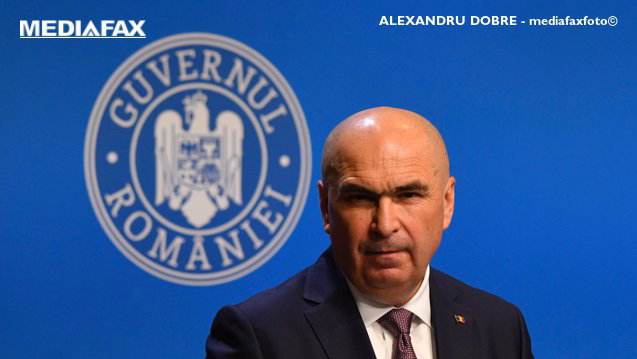
According to Ilie Bolojan, the ordinance aims to improve the efficiency of both local and central administration through staff audits and expenditure cuts where spending is deemed unjustified.
“First of all, it makes the two administrations more efficient by proposing staff audits and expenditure cuts where spending is found to be unjustified, which will result in a more efficient local and central administration in the coming years, reducing the cost base of Romania’s public administration. It also includes several very important clarifications regarding support for decentralisation, a topic that has been discussed many times but, unfortunately, implemented to a limited extent,” he said.
The ordinance also seeks to advance decentralisation by shortening and simplifying procedures and creating a legal basis for the transfer of assets currently managed by central authorities.
“This package strengthens the capacity of local public administration to generate policies in urban planning, local taxes and duties, and territorial planning, and reinforces the administrative capacity of the entire local public administration in Romania, encouraging it to become more efficient and performance-oriented,” Bolojan added.
Under the ordinance, local authorities will be able to decide whether and under what conditions gambling activities may operate in their jurisdictions.
The emergency ordinance on economic relaunch sets out a multi-year framework running until 2032 and is intended to complement the current fiscal and budgetary framework.
“The adoption of this package represents for Romania a transition, through this we mark a strategic transition from growth based on consumption to growth based on productive investments, innovation, and domestic production,” Finance Minister Alexandru Nazare said, arguing that the previous consumption-driven model had led to budgetary imbalances and stressing that the package is designed as a long-term instrument rather than a short-term measure.
“The relaunch package is not a package targeting 2026. As a financing scheme, it targets Romania’s economy until 2032. We have 5 billion euros for all the schemes,” Nazare stated.
According to a draft published by the Economic and Social Council and cited by HotNews, the relaunch package centres on large “significant impact” investments, defined as projects of at least RON 1 billion in eligible spending that generate spillover effects and support strategic state objectives. Such projects may qualify for standard state aid schemes or customised ad-hoc support.
The package also includes a 10% tax credit for research and development, accelerated and super-accelerated depreciation for assets acquired in 2026, incentives for reinvested profit, and additional deductions for stock exchange listings. The VAT cash accounting threshold would rise to RON 5 million in 2026 and RON 5.5 million from 2027, alongside 3% bonuses for timely payment of profit tax, microenterprise tax, and personal income tax.
Dedicated state aid schemes are envisaged for sectors such as strategic and critical raw materials, net-zero technologies, high-tech industries, defence, regional competitiveness projects, tourism, and diaspora-founded businesses.
The draft also allows the state, directly or via the Investment and Development Bank, to take up to a 20% stake in companies carrying out major strategic projects. The Investment and Development Bank would play a central role in guarantee schemes and co-financing, with RON 1 billion earmarked for 2026 to address financing gaps not covered by commercial banks. The estimated budgetary impact for 2026 is around RON 2.1–2.2 billion, according to the finance minister.