
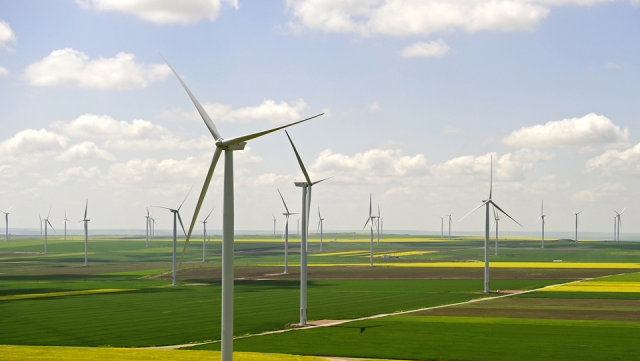
“We do not expect Romania to rise in the world attractiveness ranking once the support scheme for renewable energy is no longer available and in the absence of support for decentralized production, which would particularly use solar panels on rooftops. Adopting an action plan to implement support schemes could be a signal to investors but the Romanian energy system first needs to digest the massive injection of renewable energy capabilities installed by the end of 2016 before technically allowing a new expansion stage,” said Alexandru-Valeriu Binig of EY Romania.
A marked shift in US policy has resulted in the demise of the Clean Power Plan, which has made renewable investors more nervous about possible reductions to the Investment Tax Credit and Production Tax Credit. Concerns also include if gas prices continue to remain low and transmission capacity remains stagnant.
The US government’s overturning of the previous administration’s climate change policies, a revival of the coal industry and the revision of the Clean Power Plan have fueled a drop in the US market’s attractiveness for renewables.
China is to spend $363 billion developing renewable power capacity by the end of 2020, according to the country’s National Energy Administration (NEA). Its plan, unveiled in January, will see renewables account for half of all new generating capacity by 2020, creating 13 million jobs.
China is also to launch a pilot green certificate program in July, in which project operators would be issued tradable certificates proving they have generated clean power. These could then be sold to consumers, such as utilities or large corporations, ultimately with a view to replacing subsidy payments.
China also plans to cut its greenhouse gas emissions by 18% per unit of economic growth by 2020 compared with the 2015 level. It has now made the target binding, as part of its commitments under the Paris Agreement.
In India, which ranks second in the index. The government has ambitious targets — 175GW of renewables by 2022, with 40% installed capacity from renewables by 2030. This follows recent dramatic growth in renewables, with more than 10GW of solar capacity added in three years — from a low base of just 2.6GW in 2014 — and record new wind capacity installed in 2016–2017 of 5.4GW.
Kazakhstan (37), Panama (38) and the Dominican Republic (39) entered the ranking for the first time.