
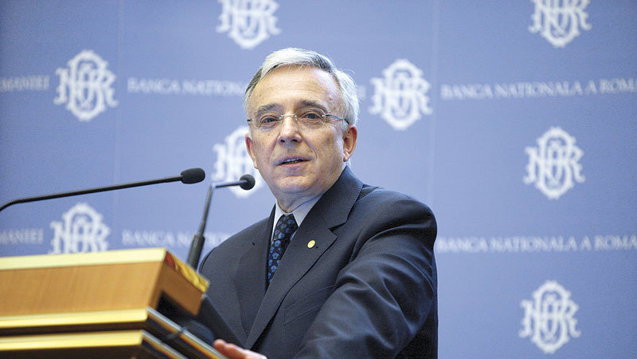
It also predicts an annual inflation rate of 4.2% for 2024 which according to the governor, is outside the target, but “reasonable” in the current geopolitical context.
The decrease of energy prices, the Brent crude prices, the appreciation of the Romanian leu and the support schemes granted by the Government all contributed to the reduction of inflation trends. Isarescu also mentioned consumption, which entered a downward trend, the average salary, and the increase in investments which supported aggregate demand.
Isarescu pointed out the need to gradually reduce the current account deficit which presently nears 10% of gross domestic product (GDP), a situation similar to that of the 2007 – 2008 financial crisis period. “Financing needs were covered, but one must be cautious about keeping a certain balance”, according to Isarescu.
The central bank governor also emphasized that the monetary policy did its job, considering a stable exchange rate and a slowdown in the lending activity, adding that Romania’s central bank would further maintain “a proper monetary policy.” Isarescu did not rule out a possible cut in its benchmark interest rate provided the inflation rate would get close to the monetary policy rate.
According to Isarescu, a rough tightening of the monetary policy may trigger a huge recession which could turn the entire economy upside down. “We must be realistic and see what the central bank can do”.