
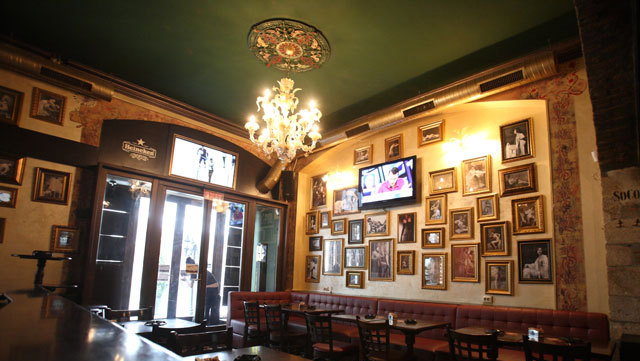

Bucharest’s old town has grown in the past nine-ten years, turning into the capital city’s entertainment hotspot, but bar, coffee shop and restaurant owners say the number of retailers also needs to expand, following the model of other European capital cities.
At present, 44% of total spaces are filled by restaurants, coffee shops, bars and clubs and 26% by stores, according to a market survey conducted by Quantix Marketing Insights for City Grill group, a major restaurant operator in the area. The area is delimited by Calea Victoriei, Regina Elisabeta boulevard, Ion C. Bratianu boulevard and Splaiul Independentei.
“I believe there needs to be parity between retail and HoReCa,” says Oprea Bebi, manager of Bordello and Republic bars. He adds that, though shyly, retail expansion can be felt, while in HoReCa the number of units is relatively flat.
The old town started developing in the mid 2000s after several years when the area was characterized by derelict buildings, stray dogs and homeless people.
Entrepreneur Dragos Petrescu was among the first to open units in the area. He started building his business in the area in 2005. “The old town remains Bucharest’s entertainment hotspot and I believe it will further develop after the model of European capital cities,” believes Petrescu.
The coming period will see retail develop, helping HoReCa units especially in the morning and at noon. Petrescu says he does not have any expansion plans in the area, but he will seize any opportunity that should arise.
According to ZF’s latest data, the old town is visited by as many as 10,000 people daily during the week, with traffic doubling at weekends.
As regards retail, H&M and Adidas are among the most important players that have penetrated the old town’s very center. In recent years, the number of brands interested in opening stores in the area has risen, with Turkey’s Koton even buying a space in Lipscani street. The other major retailers state, though, spaces are too small and unfitted and rents are too high.
At present, only 5% of spaces in the old town’s central area are still vacant, but some of them are unfitted, others under litigation. The others are awaiting tenants.
(English version by Catalina Apostoiu)