
The high vacancy rate and the downward trend of rents for office space in Bucharest, as well as the low purchasing power when it comes to buying a home do not allow for too much optimism, so the real estate market should continue its recovery in small steps to avoid a new bubble.
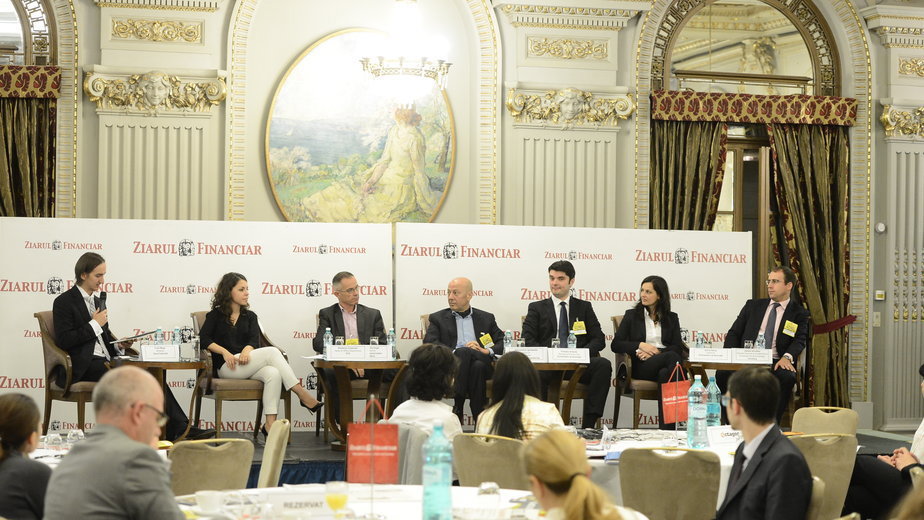
“Most of the demand for office space comes from call centers or IT centers relocated to Romania. We are not selling manual labor, we are selling cheaper ‘brains’ here,” said Alexandros Ignatiadis, shareholder of Octagon Contracting and Engineering at the ZF Construction & Infrastructure Summit ’14. The event was organized by ZF in partnership with Genesis Development, Marsh, Octagon, CertAsig, Schoenherr, Skanska and Biris Goran.
“There is nothing wrong about this, but there is always a risk of volatility and it is subject to growth and decline of developed markets.”
Ignatiadis, whose construction company helped develop projects like Sky Tower, Hermes Business Campus and Green Court, says people should pay more attention to the sustainability of real estate projects and must avoid the 2006-2008 mistakes, the exuberance of those years.
The potential is there, so Richard Burleigh, president of Skanska Construction Romania, compares the local market with Poland ten to twelve years ago, explaining that it took Poland four or five years from accession to really start attracting European funds. The local talent is there, he says, as does Radu Enache, who has been running the operations of HP in Romania for more than two decades. HP’s Bucharest office now numbers more than 4,000 employees and keeps developing.
In turn, Catalin Iorgulescu, managing director of BPO company WNS with 400 employees in the West Gate complex in Bucharest, hopes to take the local office to more than 1,000 employees within three years, which will provide services to major companies listed on the international markets at ‘competitive’ prices.
“I maintain my opinion,” says businessman Liviu Tudor, one of the pessimists or maybe one of those who are realistic about the real estate market, who believes the crisis is not over yet. Under the circumstances, the company he runs, Genesis Development, will continue to develop office space only when it gets clear demand from a company that wants to rent a significant part of that space.
On the other hand, Sweden’s Skanska is working on its first project in Romania, the Green Court office complex on Barbu Vacarescu Boulevard in northern Bucharest, because it believes in the medium and long-term potential of the market.
(English version by Loredana Fratila-Cristescu)