
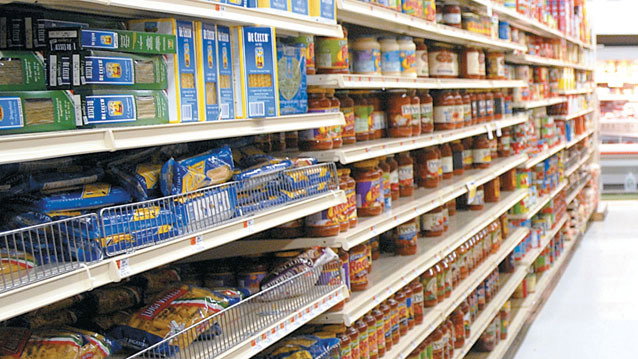
Aro, Marca 1, Clever and Pilos products are more and more often found in the shopping carts of Romanians hunting for the lowest price, which is the main criterion used when buying something at this time of continued consumer spending decline.
Private labels also allow for a diversification of the range of products, says Thierry Destailleur, head of operations of retailer Cora.
Sales of food, detergent and care products under Cora’s private labels almost doubled last year compared with 2009 and reached about 8% of the total, that is EUR20 million, ZF has calculated.
The sales of Cora’s private label products, Winny and Traditia Gustului, will continue to increase, Destailleur said.
All in all private labels had gone up to 7.2% of the local fast-moving consumer goods market by mid this year, compared with 6.3% last year, as revealed by market research company Nielsen.
The private label percentage is based on the key account index, which includes cumulated sales from some of the retailers Nielsen works with. Therefore it does not include Selgros, and the discount chains and hypermarkets such as Kaufland and Auchan, whose data are only estimated, Nielsen officials said.
There are also retailers where the share of private label sales in the total exceeds the national average by far. Private labels account for more than 10% in the sales of Carrefour, Profi and Billa, and for 80% in Lidl’s case.
Under the circumstances, ZF calculated that the market could reach EUR1 billion this year.
Highest percentage of private labels can be found in the food sector, 8.3%, from 7.3% in mid 2010, according to Nielsen Romania. Non-food private labels went up from 3.8% to 4.6% in mid 2011.
Sorana Georgia, who runs supermarket chain Billa, says that best-selling private label products in this network are staple foods, beverages, sweets, dairy products and cold cuts, as well as cosmetics, detergents and home care products.
“I can tell you that private labels account for over 12% in Billa’s sales now. It’s a visible growth, become more and more significant from one year to another (…).”
Billa’s private labels are Clever and My. Considering it posted sales of 1.14 billion lei (EUR262.3 million) last year, private labels contributed over RON 135 million (EUR31 million), according to ZF estimates.
Carrefour officials say that private labels are now at 12% of the total sales in the company’s hypermarket, supermarket and convenience store network.
Supermarket chain Profi held by investment fund Enterprise Investors saw private label sales at 17.6% in October. They are set to reach 17.9% for the entire year. Best-selling private label products are staple foods, cereal, canned food, trash bags, paper products, eggs and pet food.
Local trade sector leader Metro Cash&Carry, whose sales reached EUR1.256 billion last year, bet on private labels such as Aro, Fine Food, Horeca Select, H-Line, Rioba and Sigma. Best-sellers are staple foods, canned food, sweets, disposable products, plastic and paper products, trash bags, home care, kitchen products, home decor and small home appliances.
Metro Cash&Carry intends to boost international sales of private labels to 20% by the end of 2012. Such a share in Romania, if the sales remain at the same level of EUR1.256 billion, should be worth EUR250 million.
Private label champion in Romania, however, is German discount retailer Lidl, which currently operates 130 stores on this market. It sells no-name products, relying on the price to attract customers, so that private labels account for 80% of the total.
Whereas Romanians did not stay away from private label foods, private labels have not made much of an impact on the beverage market, dominated by the likes of Coca-Cola and Pepsi. Therefore they reached 4.5% in mid-year.
With the economy in crisis for almost three years and a consumer-spending decline by almost 20% from 2009 through 2011, Romanians go for the lowest price, which is used by retailers as the ultimate tool to attract customers.
(English version by Loredana Fratila-Cristescu)