
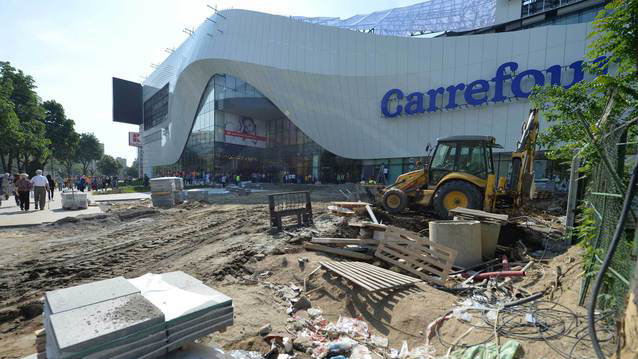
“You can no longer find plants in the middle of the city anywhere in the world and most often the value of a plant in the center of Bucharest is lower than the land on which it sits, so it makes sense to find such use for the space,” says analyst Aurelian Dochia.
“This trend (to turn former plants into shopping centers or office buildings i.e.) should not be alarming, cities must be built for people, not for plants.”
Five of the biggest transactions whereby NCH sold land of the former plants, such as UMEB and Tricodava, got the firm some EUR230 million, according to ZF estimates. The assets in question had been bought for much less fifteen years ago.
The latest such deal is the acquisition by Ikea of the site of the Anticorosiv plant for its second store in Romania. It paid EUR14 million for it, according to ZF estimates, to companies held by Broadhurst Investments, managed by NCH.
NCH also sold the UMEB site in western Bucharest to Israeli-held AFI, which built the most expensive mall in Romania, AFI Palace Cotroceni and several office buildings there.
In the early 2000’s, NCH was buying retail space, plants and other businesses one after another, at prices that seem small change even today, after the crisis.
For instance, NCH acquired control of Electroaparataj in 2001, when the company was valued at some $5 million on the stock market. Six years later, the site of the former plant in Pantelimon (eastern Bucharest) was sold to Austria’s Real 4 You for EUR60 million, which along with South Africa’s NEPI built the Mega Mall on it, which was inaugurated this year.
The same happened with Tricodava and Electrotehnica in Drumul Taberei (west of Bucharest) sold for EUR42 million and EUR30 million. NCH had initially teamed up with AFI for the development of the mall on the former UMEB site, but Siminel Andrei decided to back out of the project for EUR78.8 million before construction started.
“Such plots (of the former plants i.e.) are large and located in areas that were once considered the outskirts of the city, but with the city expanding they ended up surrounded by densely populated districts,” says Alexandru Reff, partner of law firm Reff&Asociatii, which advised Ikea in its acquisition of the land for its second store.
“I think more sites of former plants will share the same fate.”
Negotiations on buying a former plant site may take months or even years, Reff says.
NCH is not the only one to sell former plant sites for redevelopment. For instance, the land of the former Prodplast plant near Piata Obor will accommodate a new mall, Veranda, due to open next year, while the former Munplast plant site in Drumul Taberei now accommodates a Kaufland hypermarket. While Prodplast and Munplast relocated operations to the Faur industrial site in the city, in many cases the plants did not move, they simply ceased operations. Bucharest does not have any large plant with more than 1,000 employees left, ZF has found.
Siminel Andrei did not provide any comment on the acquisition of the former sites of Bucharest plants.
(English version by Loredana Fratila-Cristescu)