
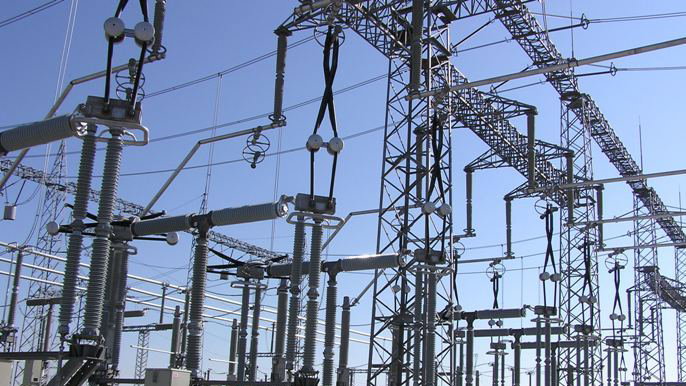
Transelectrica is the biggest government monopoly, having posted EUR734 million in revenue in 2011, and is also one of the most heavily disputed companies when it comes to appointments of members of the board of directors and of the chief executive, dictated by the political clientele.
That is because the chief executive of Transelectrica puts his signature on contracts in the range of hundreds of millions of euros every year, contracts signed for long-term investments in equipment and network upgrades, as well as procurement of goods and services to conduct the company’s day-to-day business. The board of directors then has to approve the large contracts and the financial statements of the company.
The stake is not just Transelectrica, but also its branches (Teletrans, Icemenerg, Fromenerg, SMART and OPCOM), each with its own investment and spending budget.
This is why every economy minister in the last four years has rushed to appoint a new chief executive of Transelectrica, as well as new members of the board of directors, without taking into account the fact that the company is listed on the stock exchange and any decision makes an impact on its share price or that a govenrment ordinance came into force at the end of last year and stipulates clear rules for appointments to the board of directors and of the chief executives (Ordinance 109).
One month after becoming economy minister, Adrian Videanu put Siemens’ Adrian Baicusi in charge of Transelectrica in January 2009. In October 2010, a few months after Videanu left the government, Baicusi, too, left Transelectrica (official version: he resigned, unofficial version: he was fired) and the new minister, Ion Ariton, who came from Sibiu, gave Stelian Gal, the former CEO, who was running the Sibiu branch of Transelectrica at the time, his old job back. In April 2011, Ariton appointed Horia Hahaianu CEO, the former head of the Teletrans subsidiary. A few days after the departure of the Boc Cabinet, in February 2012, Hahainu manages to anger Premier Mihai Razvan Ungureanu by stating that there is not enough power for both domestic consumption, driven up by the cold weather and the rising export demand. Hahaianu was fired right away as demanded by the prime minister but stayed with the company.
The young economy minister Lucian Bode then appointed Octavian Lohan, the deputy chief executive of Transelectrica to CEO. Lohan lasted only two and a half months, until the Ungureanu Government fell and the new economy minister of the Ponta Government, liberal Daniel Chitoiu, put Marius Ion Mateescu in charge of the company.
One interesting thing about all these managers is that they all gave up better paying positions to become CEO of Transelectrica, where the salary is capped at about EUR1,500 in net amount per month. For instance, Baicusi was making EUR20,000 a month while at Siemens, and Lohan earned about EUR3,000 as deputy CEO. Hahaianu’s salary as head of Teletrans is not public knowledge.
Appointments to the board of directors were done using the same criteria, even though Ordinance 109 says the members representing the government in the board shall be chosen based on expertise and competence in the field with the help of human resources experts.
The new govenrment did not show any more interest in observing the provisions of the ordinance, as the new economy minister appointed new provisional members in Transelectrica’s board. The company has not decided on a recruitment firm to help it choose the board members yet.
What was the impact of the changes of last few years on Transelectrica? Operations-wise, none. Despite its monopoly position, Transelectrica posted a mere 3% net profit margin, after having posted less than 0.4% margins in 2009 and 2010. Similar companies in Europe operate at margins of more than 10%, which may be as high as 40%. On the other hand, the poor results made an impact on the stock price, which have fallen to less than the IPO price in 2006. The government sold another 15% in Transelectrica in March and got EUR37 million for the stake.
“My opinion is that changes have a minimal impact on the business of the company. It is hard to see the influence of these managers on the strategy and operations,” says Iuliana Mocanu, head of the Raiffeisen Capital&Investment’s research department. “Of course this constant changing might have a negative impact on investor perception but I still think it has very little influence on the price of the shares precisely because apparently the changes do not seem to lead to modifications in operations or strategy. I definitely believe that the appointment of a competent manager, who knows the industry, promotes a clear strategy and makes the company efficient might have a positive influence on the price and value of the company.”
Transelectrica’s business differs in some respects from the business of other companies in Europe. A lot of its revenue comes from operations that do not generate profit, and its only profitable business is the electricity transmission, which accounts for 40% of its total revenue. Therefore analysts believe that if the net margin of Transelectrica were adjusted to this revenue, it would be higher.
On the other hand, the results of the company are significantly influenced by the trend of the exchange rate, because it has high foreign currency-denominated debt. In case the leu continues to depreciate a great deal, Transelectrica might slip into the red this year.
(English version by Loredana Fratila-Cristescu)