
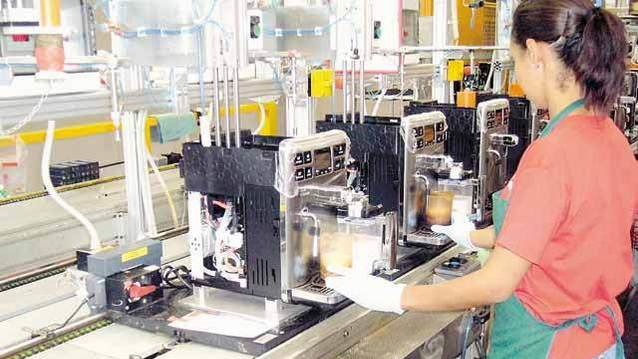
The decline was due to the retail business as the plant in Orastie (central Romania) has constantly increased its revenue after 2009 when Philips took over the facility after acquiring its owner, Italy’s Saeco.
The manufacturing business doubled since 2008 and reached EUR72 million last year, while the retail revenue almost halved to EUR45 million. An explanation might be that the production of the Orastie plant is exported while the local electrical and computer market still has not overcome the crisis.
The crisis cut into the spending appetite of Romanian consumers, who bought a new fridge, washing machine or stove only when they needed to. Tablets and smartphones are about the only products whose sales are going up.
Philips’ retail business does not include electrical and computer products, only but also lighting fixtures and healthcare products and services.
Electronics and home appliances, however, generate most of its retail sales in Romania, followed by lighting fixtures and healthcare products, which is also generally true for emerging markets. On the developed markets, however, it is healthcare products that generate most revenue for Philips.
Philips officials do not provide details about their Romanian revenue, but have recently said consumer spending continued to decline in this country and the trend will not reverse until 2015.
The largest home appliances manufacturers in Romania are Arctic, which makes refrigerators in Gaesti (south of the country), and Electrolux, which makes stoves in Satu Mare (north of the country). Italy’s DeLonghi has recently started production of coffee makers near Cluj (NW Romania) after EUR30 million investment.
(English version by Loredana Fratila-Cristescu)