

Petrom’s most important oil and gas field, Lebada Est, is located in the Black Sea.
Sales on the exploration and production segment stood at 11.7 billion lei (EUR2.6 billion) last year, according to Petrom information, and the Black Sea contributed about EUR500 million. Production in offshore fields increased 8.5% between 2005 and 2011.
The Black Sea has already confirmed its potential for offshore drilling in shallow waters, which is why it is now subject to the most extensive deep water drilling campaign ever conducted in Romania. Another area that holds promise for a country that has been drilling for oil for 150 years and for gas for more than 100 years is Oltenia (southern Romania).
“As we see it, the Black Sea and Oltenia are the most promising areas for oil and gas drilling in Romania,” says Gabriel Selischi, director of domestic asset business unit at Petrom.
“Offshore production went up every year from 2005 though 2011, from 29,500 barrels of oil equivalent (boe) to 32,000 boe per day. We are now extracting at a depth of 70-100 meters, while wells are drilled at 1,500 to 3,000 meters below the seabed,” Selischi explains.
He says several factors influenced the oil and gas production of the Black Sea.
“Two factors turned the Black Sea into an area with a rising production. We made a new discovery, Delta 6, in 2008, the first big deposit found after a very long time. This is also where the most difficult well ever drilled by Petrom is (…). It is the best oil well in Romania, whose initial production was 2,500 barrels per day. The second factor was infrastructure investments,” Petrom official explains.
The Black Sea is also where Petrom’s best natural gas well is.
“We’ve been drilling one or two offshore wells every year and each of them costs about RON80 million to RON100 million. We now have 70 wells at sea, 54 of which are oil wells and 16 are gas wells. The gas well that generates the highest production is also offshore,” Gabriel Selischi said.
Besides shallow water drilling, Petrom is also looking at deepwater drilling and has been exploring the offshore Neptun block in the Black Sea in partnership with ExxonMobil since 2009. Petrom has two blocks in the Black Sea, Neptun and Istria, which cover about 14,000 square kilometers.
OMV has great expectations from Black Sea blocks
The first signs are good as the two companies said early this year that the first deepwater exploration well ever drilled in Romania, Domino-1, revealed a natural gas accumulation estimated at 42 to 84 billion cubic metres.
Taking into account the maximum value of this deposit and a recovery rate of about 70%, this amount of gas alone would be enough for Romania’s entire consumption for about four years.
On the other hand, the same amount should free Romania from Russian gas imports for some twenty years. Their successful find made Petrom and its majority shareholder OMV become involved in similar projects in Ukrainian and Bulgarian waters.
Sterling Resources sells portion of Black Sea block to ExonMobil and Petrom
“The Black Sea is a medium and long-term opportunity we are now working to quantify. We need to continue exploration drilling. Development in the Black Sea is up to the commercial and technical viability of the Domino deposit. The decision to invest at sea depends on a cost and revenue projection and a tax and regulation system favorable to investments,” Selischi says.
The Black Sea production operations currently get about 10% of Petrom’s exploration and production investment budget. The company budgeted some RON4 billion for this sector in 2012.
Another area with a lot of potential, as Petrom’s official says, is Oltenia. Last year, the company started test exploitation of the onshore deposit at Totea, Gorj County.
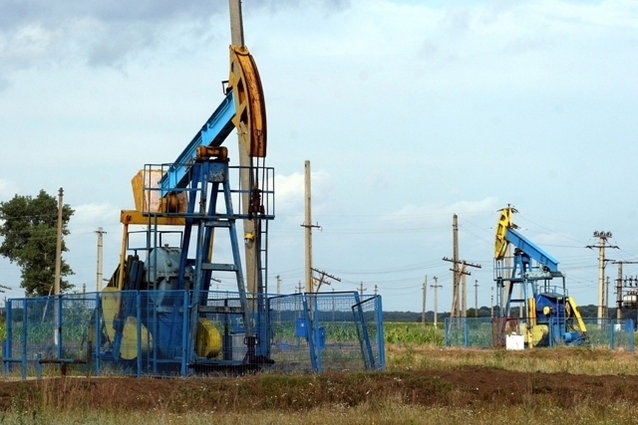 “Totea is the biggest recent onshore gas find. Petrom’s production comes from ten geographical areas. Its most important gas production area is Oltenia. This is where 45% of the gas comes. The second most important area is the Black Sea. Petrom extracts 14.6 million cubic meters a day, and the offshore wells contribute 3.5 million cubic meters a day, which is 25%. Things are not as clear cut with oil production, we don’t have a dominant region but we could say the most important areas are those in the Getic Depression (the area around Targoviste and Pitesti in the south of the country i.e.),” Selischi explained.
Petrom has 240 commercial oil and gas fields.
“If we compare it with the age of a person who is now 100 years, the average age of Petrom fields is 80 years.”
The old age of the fields is one of Petrom’s problems, after all.
“We’re dealing with two challenges here. Very many fields are mature, which means they are depleted. Other than that, most fields are very small. While our production stands at 170,000 boe per day, the biggest well of the biggest field in Saudi Arabia, Ghawar, generates a higher production than we do with all our wells. Our goal is to stabilize production,” Selischi added.
Petrom currently has nine redevelopment projects in progress, and the budget for such a project generally stands at EUR100 million to EUR250 million. Each of them takes three to five years to complete, the official of the company said.
“Not all these projects have reached the final investment decision,” the Petrom representative said.
Petrom’s net profit fell in the third quarter
Petrom posted RON2.892 billion in net profit in the first nine months, down 1% on the year-ago period, while sales rose by 18% to RON19.185 billion.
(English version by Loredana Fratila-Cristescu)