
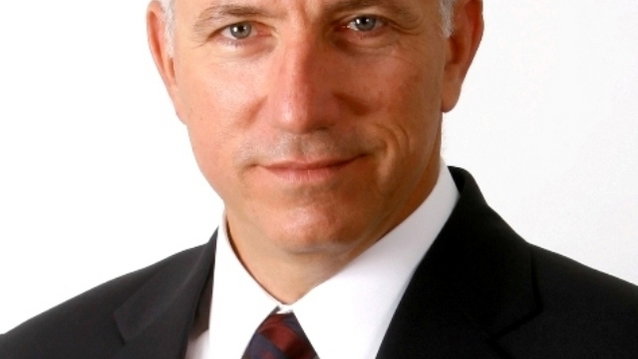
Greek group OTE, which controls the largest group of telecommunications companies in Romania – made up of Cosmote, Romtelecom, Zapp, as well as telecom retailer Germanos – will carry on with investments on the “difficult” local telecom market, and will continue its fight for clients against rivals Orange, Vodafone and RCS&RDS as the market has growth potential, especially on the data and TV services segment, Michael Tsamaz told Ziarul Financiar in an interview.
“Our investments in Romania will continue,” Tsamaz says, adding that they will not be limited to the payment of licenses won last year by Cosmote – no. 3 on the Romanian mobile telephony market – in the biggest radio spectrum auction organized so far by the Romanian state. Cosmote, which won licenses to develop a 4G network, as well as to continue to supply existing services until 2029, has to pay a EUR180 million bill, EUR130 million of which are due this year. The auction was held in September last year.
“In 2013, we will pay 130 million of euro for the licenses. This is on top of the approximately 500 million per annum total investments that we have for the region. In the 2012-2013 period we will have invested 180 million euro only on the licenses. (…) Our investments in Romania will continue, we will invest in 4G technology, on the mobile [segment], we will continue investing in broadband services for the fixed [internet] and on TV.
He did not provide details on the exact amount that will be invested by the group’s companies in Romania, but the amounts tend to be of over EUR100 million per year.
For instance in 2011 Romtelecom alone invested EUR84.5 million, according to data published by the OTE group.
The OTE group will continue investments in Romania because it is aware that in order to generate long-term growth, one also needs short-term investments, says the head of OTE.
“This is sometimes what makes it difficult because especially in these times the shareholders want the return now. You have to find the right balance [between investments and earnings],” Tsamaz says.
Talks about investments in Romania are more “difficult” because Romanians are avid for technology and rates for telecommunications services are the lowest in Europe, says the head of the OTE group, one of the most powerful executives in the telecom industry in Europe, who manages an annual business of almost EUR5 billion.
“You, Romanians, are probably the most avid technology users that I have met. In fact what I say to my colleagues in Greece and in Germany is that in Romania we have the best IT professionals that you can find anywhere in Europe.”
He says that on the other hand Romania has the cheapest telecom rates in Europe.
“This makes it a bit more difficult. Because when you have very low ARPU [average revenue per user], very low telecom rates, your profits are very limited, which in turn means that the money you can allocate for investments is limited.”
And an international investor expects an adequate return, he says, but “when you’re in a market which gives you very low margins then it’s much more difficult.”
“In Romania you can find all the telecom and the technology services that you can find anywhere else in Europe at the best rates with the best quality. This is something that is required by the Romanian people who have very high expectations.”
Under these market circumstances, Cosmote and Romtelecom last year recorded very good results, Tsamaz says.
“I am proud and relieved at the same time, because not only do I believe in this market, but for me, succeeding in Romania, is a personal bet,” says the head of OTE, who has been working for the Greek group since 2001.
As for the future of Cosmote and Romtelecom, things are clear, says the head of OTE: the two companies must merge because only the operators that will be able to offer the full spectrum of telecommunications and entertainment services will survive. But, Tsamax insists, the integration of Cosmote, which has around 2,500 employees together with Germanos, Zapp and Sunlight, and Romtelecom on the other hand – which has around 7,500 employees after several restructuring programs – will be done with “care and caution” and will “benefit” both shareholders.
“It’s matter now of studying the best way of doing it and at the same time making sure that both shareholders, the Romanian Government and OTE, will have a common benefit. So this is a process that needs to be handled with care and caution and we will do so because we want everyone to understand, to believe that it’s something positive. So I’m very confident that in the near future we will come to an agreement.”
A merger between Cosmote and Romtelecom would create the largest player on the Romanian telecommunications market, with annual revenues of over EUR1 billion and with over 11 million subscriptions, which would surpass, according to these indicators, rivals Orange and Vodafone. For the time being the Romanian state has not made any public announcement as to plans for the merger.
Communications Minister Dan Nica did say though in February that the force of the two companies lies in integration.
The integration of the two companies is also one of the priorities of German Nikolai Beckers, former CEO of Deutsche Telekom France, who will as of April 1 take over as CEO of Cosmote and Romtelecom from Stefanos Theocharopoulos.
(English version by Daniela Stoican)