
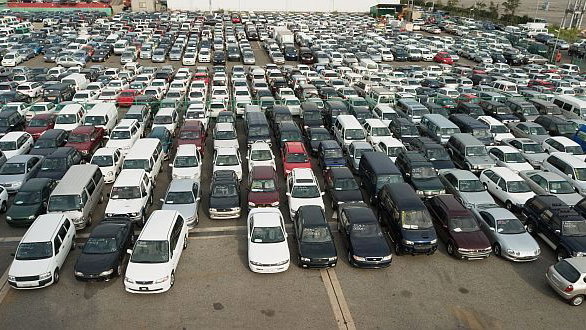
An older national car fleet automatically leads to increased pollution and affects the business of official service providers and of car importers as owners of old cars turn to cheaper non-official service centers.
As imports of second-hand cars have risen in the past few years, so has the average age of cars. While in 2007 it was 11.2 years, now it is 13 years, according to ZF calculations based on DRPCIV data. During the last five years, when almost 420,000 old cars were scrapped through the clunkers scheme and the state invested EUR380 million to renew Romania’s car fleet, the average age of cars continued to decline. During this period 1.1 million second-hand cars came into Romania and less than a million new cars.
“Reality proves that despite the best intentions of the “Rabla” (clunkers) program, one needs firstly to optimize the pollution tax. Moreover, the new environment stamp duty will not only support a fleet of older cars, but will also encourage it because the stamp duty will be lower by up to 90% for very old cars,” says Constantin Stroe, vicepresident of Automobile Dacia, who is also president of the Romanian Carmakers Association (ACAROM). He adds that the clunkers program cannot achieve its goal if the pollution tax in force up to the present and the stamp duty, to be introduced as of March, encourage the import of very old cars.
“So the money spent so far on the Rabla program has basically been wasted,” Stroe added.
(English version by Loredana-Fratila Cristescu)