
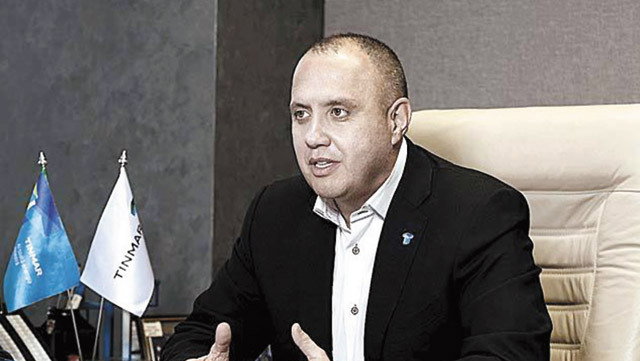
To save his business, Oancea says he had to drop customers, since the energy traded for as high as EUR450/MWh at times, compared with a usual average of EUR48/MWh, because the rise in price could not be passed on to customers.
“Considering the energy sector crisis last year, the strategy of the company was to drop some of the customers and give up some of the market share to contain losses. Had we not done that, losses would have probably been three times higher.”
Finance Ministry data show Tinmar Energy, the largest company in the Tinmar group, posted 1.8 billion lei (EUR386 million) revenue in 2017, almost 30% lower than in 2016. It also posted RON29 million loses compared with a RON14 million profit.
Whereas it was the second leading supplier on the competitive segment with 9.1% market share in 2016, last year its market share dropped to merely 4.53%.
Energy market watchdog ANRE data show the company continued to lose market share this year, as well, so it only accounted for 3.25% of the electricity supply market at the end of February.
“The 2017 decline served to protect us from the volatility of the prices caused by extreme phenomena. We plan to return to the leading position and regain the market share we had in 2018 and in the medium run.”
Tinmar started as an oil product trader in 2011. In 2014, it got the license to supply electricity and this was the most important factor in its growth. The customers it supplied electricity to include Lukoil, Lidl, Arctic and Carrefour.
In 2017, however, the market turned against the major electricity suppliers, as the year went down in history as one with the highest prices.
January became the most expensive month in ten years, with electricity trading for a staggering EUR450/MWh at times, compared with an average of EUR30 to EUR40/MWh.
According to the data published by the OPCOM energy exchange, the average price on the Day-Ahead market, the most important market of OPCOM, was about EUR48/MWh in 2017. This was the solely the price of electricity sold by producers to suppliers and was the highest in five years, without hitting the 2008 record, though.
This caught many companies off-guard, as their buying policies focused on the spot market, considering bilateral contracts had become unappealing due to higher prices.
A year later, many of the suppliers that when through the shock of 2017 say they have turned from risk takers into risk-averse players, choosing contract stability over price bets.
“We treated 2017 as a year of consolidation, a year when all companies in the energy sector suffered losses but those that stayed on the eligible market are those who managed to weather a crisis.”
Tinmar Energy says this year the household segment has become interesting, besides regaining industrial customers.
“This is the first year we want to make sure our strategy is tailored to two types of customers, business to business and residential ones.”
Tinmar is aiming for an over 10% market share on the household consumer segment, which is very competitive. This means 0.8 million households should leave the current providers and move to Augustin Oancea’s company. (EUR1=RON4.6610)
(English version by Loredana Fratila-Cristescu)