
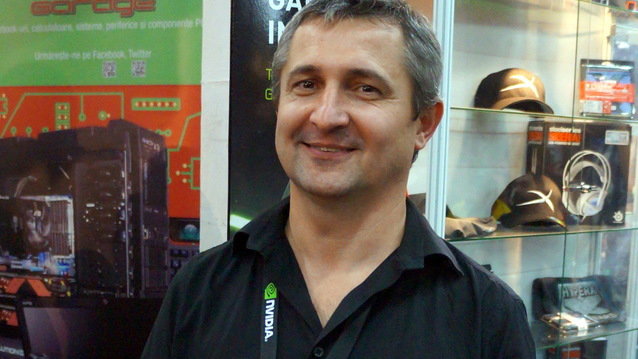
“The market shrank 10% to 136,000 units sold in 2012, but rose 15% in value,” the Nvidia official told Ziarul Financiar.
The average price of a video card in local stores was EUR69 last year, up from EUR44 in 2011, which puts the market at almost EUR10 million in 2012. Video cards for gaming use may cost as much as EUR1,000.
The Nvidia official said 31,000 video cards were sold in Romania in the first quarter.
“The latest model in the high performance GTX series, a Titan priced at EUR1,000 launched in the spring, sold 60 units in Romania on the first day. Interest in gaming video cards is on the rise,” Stroe says.
The share of such cards in total sales increased from 17% to 23% last year, and could go up further to 27% or 30%, according to Nvidia estimates. The company accounts for two thirds of the market. The figures do not include video cards used in notebooks, a separate segment, where it accounts for about 80%.
“If the growth pace remains unchanged, more than half of the video adapters sold in Romania will be video cards for gaming in two years,” says Cristi Stroe, adding the local market is far behind mature regions like Sweden, where such cards account for 90% of sales.
The Nvidia official says that people are now replacing a video card once every three years on average instead of once every two years as they used to because of the austerity across Europe.
“I think we’ve reached bottom in the region and should see growth from now on.”
Sales of video cards in Romania are tightly connected to the trend of the computer market, which resumed growth in the last few years after plummeting due to the recession.
In 2009, the market dropped 65% to 430,000 units due to the crisis. Afterwards the market has been constantly increasing and reached 730,000 units in 2012.
Nvidia is world’s largest vendor of video processing units for video cards, accounting for about two thirds of the global market. Its main competitor is AMD.
The Nvidia powered video adapters are distributed in Romania through three companies: NOD, Microlab and RHS.
(English version by Loredana Fratila-Cristescu)