
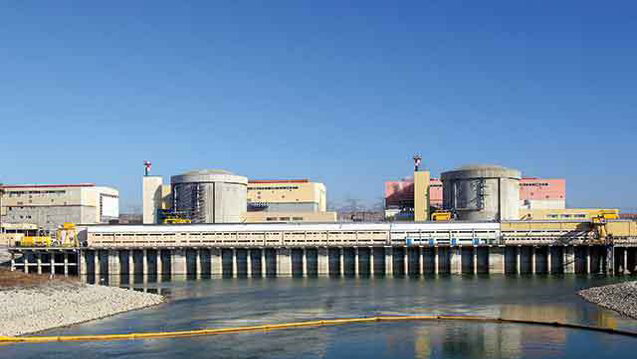
Following the partnership, Romania has the potential to accommodate the first deployment of SMRs in Europe and to become a catalyst for SMRs in the region, as well as a base for supporting operatorship of this new technology in other countries.
“The United States views nuclear energy as a pivotal technology in the global effort to lower emissions, expand economic opportunity, and ultimately combat climate change,” said Secretary Granholm.
“We have been supporting the development of SMRs for decades, and it is extremely gratifying to celebrate this important milestone for Romania to help them achieve their climate goals.”
The teaming agreement between NuScale Power, whose SMR is the first and only small modular reactor to receive design approval from the U.S. Nuclear Regulatory Commission, and Nuclearelectrica, a Romanian nuclear energy producer, comes at a pivotal time as senior government policymakers from around the world discuss the urgency of accelerating the clean energy transition.
“Nuclearelectrica is proud to be at the lead, capitalizing on its experience operating at excellent standards and one of the highest performing nuclear plants in the world, into developing the first SMRs in Europe, an energy source that is 100% carbon free and which will reduce environmental footprints and put us on a path toward a zero-emission world,” said Cosmin Ghita, chief executive officer of Nuclearelectrica.
“And at the same time, we will develop a new generation of engineers, which will benefit from the 25 years of experience Nuclearelectrica has and the groundbreaking innovation of NuScale’s SMR technology. What exciting times to contribute to the future of energy, to build a clean legacy for the generations to come.”
Under the teaming agreement, NuScale will help Nuclearelectrica evaluate its technology, and together, the organizations will take steps toward deploying a first NuScale 6-module, 462 MWe, power plant in Romania as early as 2027/2028.
The NuScale 6-module power plant is estimated to generate 193 permanent power plant jobs, 1,500 construction jobs, 2,300 manufacturing jobs and help Romania avoid 4 million tons of CO2 emissions per year.
(English version by Loredana Fratila-Cristescu)