
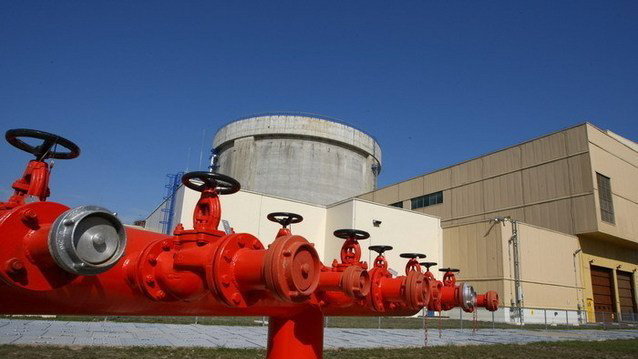
This comes after both Nuclearelectrica and Economy Ministry representatives had reassured that there was no way the failure of April 2012 could happen again, when no one had shown any interest in the two reactors. The first investors in the project came five years ago, but nothing has been done at the plant site. Construction work should have started in 2010.
Therefore the two Cernavoda reactors are relegated to the ‘museum’ of major energy investment projects discussed for years, which have not made any progress. “Exhibits” also include the EUR1 billion hydropower plant in Tarnita-Lapusesti (NW of the country) and the Romania-Turkey undersea cable.
“Nobody came. We have a letter of intent from a Chinese company but this is not a firm commitment. We are trying to find other solutions and we have a meeting about this today (Thursday i.e.). We need to find a way to fund this project and revise the paperwork,” Economy Ministry sources said. Nuclearelectrica officials could not be reached for details by the time the story was ready for posting.
Economy Ministry state secretary Rodin Traicu said this summer that the Cernavoda project would find investors by fall; talks were being conducted with two companies at the time, one from China and the other one from South Korea.
One in five light bulbs in Romania is currently powered by two operational reactors of Cernavoda; the plant provides for 20% of the domestic power consumption. Romania needs to continue its nuclear power program because of a number of reasons. One of them is the current generation system, which is really obsolete and most of it should be replaced in the next few years. About 80% of the thermoelectric power plants in service are past their lifetime, while about one third should be replaced, according to the National Energy Strategy for 2011-2035.
The reactors 3 and 4 project had a very good start in 2007, when it attracted the most powerful energy groups in Europe: CEZ (Czech Republic), Enel (Italy), GDF SUEZ (France-Belgium), RWE (Germany), Iberdrola (Spain) in addition to ArcelorMittal Romania.
At first, the government was to keep 20% in the project estimated at EUR2 billion via Nuclearelectrica. Then it suddenly had a change of heart in the summer of 2008, choosing to retain a 51% stake. At the same time the value of the project doubled to EUR4 billion without it really being explained why.
The financial crisis broke out then with the collapse of Lehman Brothers in September 2008. The government then realized it could not possibly pay as much as required for its stake in the investment and signaled willingness to reduce it. The trouble was that no one was willing to buy its shares in the project any more.
The first heavy blow for the project came in September 2010, when CEZ backed out. The government was forced to buy CEZ’s 9.15% to avoid the dissolution of the project. A new shock came in January 2011, when RWE, Iberdrola and GDF SUEZ backed out, too. The government therefore found itself with 85% on its hands when it was only planning to keep 40%.
According to the initial schedule of the Cernavoda project, construction should have started in September 2010. Instead of creating jobs and improving Romania’s energy security, it has not made any progress for two years now.
(English version by Loredana Fratila-Cristescu)