
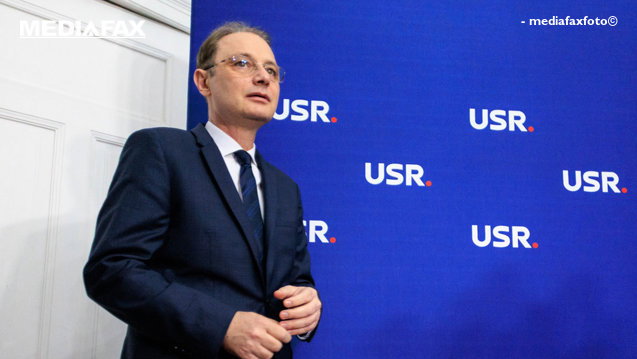
Of 355 lawmakers present, 280 voted for Niculescu’s government, well above the 233 votes required for approval in the 464-seat legislative body, according to the official results announced by the Parliament.
Last week, center-left Social Democrat Party, PSD, decided to join the Niculescu government. The new cabinet includes eleven PSD ministers and six technocrats.
Besides PSD, center-right PNL and UDMR also pledged parliamentary support for the Niculescu government to help end the political crisis, while saying they would remain in opposition. Niculescu also secured votes from the national minorities’ parliamentary group. Centre-right Save Romania Union, USR, is the only party of the previous government coalition to announce it would not vote for the Niculescu government. Far-right Alliance for the Union of Romanians, AUR, the second largest party in the parliament, boycotted the investiture vote in protest.
“Romania has no more time to lose,” Luca Niculescu said ahead of the vote, pledging to focus immediately on budget revisions, energy security and reducing waste in the public sector.
“I am an independent PM, but beyond our different political choices … we share a common responsibility for the future, which we have a duty to build together,” he added.
Niculescu, 55, is a diplomat and former journalist who served as Romania’s ambassador to France, Monaco, and Andorra from 2016 to 2022. Since 2022, he has been a state secretary at the Foreign Ministry and Romania’s national coordinator for its Organization for Economic Co-operation and Development (OECD) accession process, overseeing reforms and negotiations with the organization. He has not been a member of any political party.
President Nicusor Dan appointed Niculescu as prime minister-designate on October 5, following three other unsuccessful designations. Romania’s political crisis began on May 5, when the Parliament passed a no-confidence vote against the government led by then-liberal prime minister Ilie Bolojan, bringing down his cabinet. The motion was initiated by far-right party AUR and center-left PSD. Bolojan has since acted as interim prime minister.
Romania’s political crisis stems from deep tensions among the parties that formed a pro-European governing coalition in June 2025, which brought together PSD, PNL, and two smaller center-right parties. One of its main objectives was to curb the rise of AUR.
The coalition’s mandate included stabilizing the economy, which is burdened by the largest budget deficit in the European Union, securing access to EUR11 billion in EU recovery funds and safeguarding Romania’s investment-grade credit rating. However, public backlash over budget-cutting austerity measures severely strained the coalition, ultimately prompting the Social Democrats to withdraw their support.
The formation of a new government and the timely adoption of the 2027 budget are positive developments for Romania’s credit profile and support the continuation of fiscal consolidation, international rating agency Moody’s said on Tuesday, October 20, as quoted by Romania’s Ministry of Finance. The agency maintains its forecasts regarding the reduction in the budget deficit from 7.9% of GDP in 2025 to 5.8% of GDP in 2026 and 5.5% of GDP in 2027. At the same time, Moody’s expects the primary deficit to decline gradually to 2.7% of GDP in 2026 and 2.3% in 2027. The agency believes political stability and a credible budget are essential in the context of high financing needs and tighter financial market conditions.