
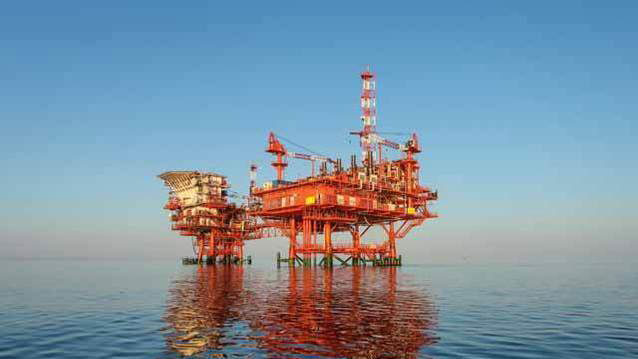
While the Black Sea and the shale gas have turned into projects that attracted world’s oil giants like ExxonMobil and Chevron, Romgaz (SNG.RO) made history on the Bucharest Stock Exchange after raising more than EUR380 million from its initial public offering (IPO). The question is how Romania could get more benefits from the major energy projects that have barely started.
The idea of setting up an energy fund started taking shape this year, and the first contribution towards it could be precisely the money raised from Romgaz’s floatation. Although experts on the market are skeptical about this, considering Romania has a EUR3 billion pension budget deficit, some other ideas have been offered.
They include a stronger involvement of the government in the major energy projects, distributing royalties to local communities that take the risk of starting these investments or even such regulations as to allow the industry to pay lower prices in the event the Black Sea deposits and the shale gas turn Romania from a country depending on imports into a country with surplus production.
Natural resources, which Romania is rich in, should bring prosperity, especially in a global economy that is developing and using more and more resources. Actually, countries rich in gold, coal or oil for instance, are often poor and find it harder to develop than those buying their resources.
The explanation to the paradox is the lack – even deliberate at times, of a sustainable growth strategy and this does not allow governments to investment the revenue derived from exploiting raw materials into sustainable economic development means such as education and transportation. Therefore the countries become poorer as they deplete their resources.
Three countries are good examples: Nigeria, Russia and Norway, which are among the biggest oil producers in the world. Nigeria ranks 13th in terms of oil production in the world, but its gross domestic product per capita stands at $1,640, which puts it on the 134th position in the world. Norway, on the other hand ranks 14th by oil production and its per capita GDP stands at $99,170, third highest in the world. Russia, the world’s top oil producer has a $14,302 per capita GDP, ranking 47th. Per capita GDP in Romania stood at $7,939 last year.
Though none of the three cases bear any semblance to Romania’s case, they show how important natural resource management is. Norway, for instance, chose to create a sovereign fund that had about EUR577 billion in assets in early March, making it the largest in the world.
Romanian politicians, too, started talking about creating such a fund this year, with the idea being to put together all the minority interests the government still holds in energy companies. The royalties or the privatization money could in turn contribute to this fund. Romgaz raised EUR380 million from its IPO but the money will not go to the fund but, according to the latest available information, to the state budget, that ‘black hole’ where most of the money made from privatizations in Romania has gone.
“Romgaz does not need this money because it can easily turn to banks considering its credibility. From now on, the money from all the other IPOs will go to the respective companies,” Constantin Nita, Minister-delegate for Energy told ZF in an interview.
“In a country that borrows money to pay pensions, we can’t talk about sovereign funds such as Norway’s”
Experts are not too fond of the idea in a country like Romania, which has a EUR3 billion pension budget deficit.
“Sovereign funds are for countries with surpluses. In a country that borrows money to pay pensions, we can’t talk about sovereign funds such as Norway and Brunei’s. (…) The same idea came up when BCR was privatized but who has the courage to keep money in an account when you can’t pay pensions,” explains Doru Lionachescu, managing partner of investment banking adviser Capital Partners.
Other experts say that an energy investment fund collecting both the money from minority stakes and royalties and dividends can be done but only as part of a broader strategy.
“The creation of a fund can be a item in a strategy but there are other things we should start from,” says Dumitru Chisalita, energy industry expert.
Several suggestions
The government should take on a more active role in energy projects, whether they are about shale gas or Black Sea exploration drilling and Romania should get more benefits from its resources. Moreover, royalty collection should not be centralized but go to the local communities that took on the risk of starting such projects and domestic regulations should ensure at least a few years of lower prices for the resources extracted in Romania so the industry could get cheaper gas even though it would mean going against European directives. These are but a few of the suggestions experts in this industry have for the Romanian government.
However, they do not see eye to eye on this.
Romania has several energy or mining projects on its desk now. On the one hand, there is the Black Sea exploration drilling, which is showing signs of a significant natural gas deposit potential. Exploration to identify shale gas resources in Moldova and Dobruja has started too, and estimates point to a 1,440 billion cubic meter potential, enough to last one hundred years. As for mining, there is the Rosia Montana gold mining project, which has stirred controversies, where investors want to extract 314 tons of gold and 1,480 tons of silver using cyanide.
The question that arises even though these projects are in their early stages is how will Romania be able to gain more from all these major investments beyond royalties, in case they do proceed?
In all, Romania’s mineral resources authority, ANRM collected 1.2 billion lei (EUR270 million) in royalties from an oil and gas production worth about EUR4 billion last year. Two companies, OMV Petrom (SNP.RO) and Romgaz, contributed almost 85% of the amount. The government collected a mere RON200 million for the rest the resources extracted in Romania last year.
Searching for a vision
“It all has to do with a vision and what we are seeing now is Romania deciding to hold a tender and hand over this vision, the energy strategy, to foreign consultants. A French or Russian cannot tidy up my house because, first, they don’t know exactly how and second, they won’t be looking out for my best interest. There’s nothing wrong with having someone give me some long-term projects and let me do my own strategy. If you start from the wrong point, you get to the wrong point,” Chisalita says.
He is referring to the recent announcement of the Minister-delegate for Energy Constantin Nita who said he had started the tender to select the consultant to devise Romania’s energy strategy. Nita said he chose this solution to ensure he would get an objective document.
One of the suggestions of Chisalita to enable Romania to get more benefits from its resources is to have the government involved in major energy projects. Minister Nita himself was saying in a ZF conference not long ago that there should be no foreign company in the energy business in Romania without a Romanian partner, even if the Romanian partner has a share of 1% or 10% in that particular venture.
Chisalita says the percentage should be higher, somewhere close to 50%.
“Egypt went through a somewhat similar situation. Foreign companies came, took its resources, but on the other hand, the government did not have the money for such projects. The government must have some 50% of these projects and the partner should ensure operational management,” Chisalita added, saying that labor and equipment should largely come from Romania.
Others contradict him saying that Romania should not imagine it can impose this requirement, but instead should come up with quality work force and equipment so foreign companies would choose to buy Romanian, believes Capital Partners’ Doru Lionachescu.
Romania’s oil and gas equipment industry has attracted significant investment in recent years such as the Lufkin and Cameron plants in Ploiesti. Market sources say the Cameron facility is exporting equipment used in the US shale gas industry.
Lionachescu believes the solution lies elsewhere, in finding a way to have royalties go to local communities and let them get lots of money, which is essential and this is how the Americans do it. Moreover, local communities should be allowed to decide how high taxes should be.
(English version by Loredana Fratila-Cristescu)