
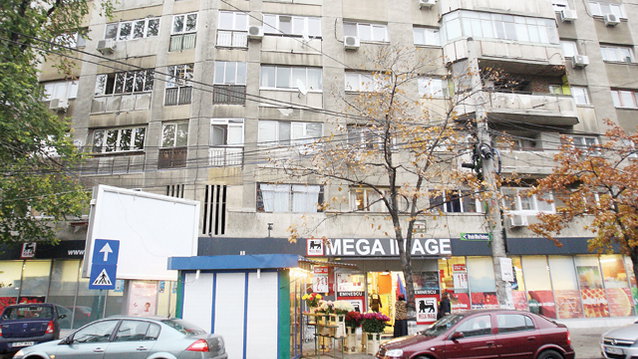
The Belgian-held company continues to expand and the Competition Council says there is no reason why it should not do it, as long as it does not buy competitors.
“A retailer may expand this way (aggressively i.e.) for as long as it does it organically (…) and not by acquisitions from rivals,” the Competition Council representatives answered ZF’s question about whether a retailer may expand as aggressively as Mega Image is, especially since its store openings drive many traditional retailers out of business and change the local retail landscape.
More than 45,000 small retail businesses have gone belly-up in the last few years because they could not cope with the financial crisis and the supermarkets that challenged precisely the territory previously occupied by small family retail businesses.
“In case it buys from competitors, it has to notify the Competition Council thereof and seek its approval if the requirements of the Competition Law are met (…),” the competition watchdog representatives added.
Market shares in the food retail business are calculated region by region. The Competition Council may intervene when a deal creates a dominant position on such a regional market and the company abuses its dominant position.
The watchdog attempted to prevent a potential dominant position of Auchan in Targu-Mures and Craiova after the Auchan-Real deal, using price and expansion restrictions.
Mega Image has expanded chiefly organically and sometimes bought small chains developed by Romanian entrepreneurs like Primavara in Bucharest (Ioan Avram) and Luca in Brasov (Luca family).
On Iuliu Maniu Boulevard or Stefan cel Mare and Pantelimon Roads in Bucharest Mega Image opened a store every several hundred meters to secure strategic positions and keep competitors from setting up shop there. This is most visible on Stefan cel Mare where six or seven Mega Image and Shop&Go stores operate on 2.2 kilometers without any competition from Carrefour Market or Profi.
The battle is now fought between the Belgian-held retailer and the small neighborhood shops, which can only attract customers who are in a hurry and stop to buy some cigarettes and a cup of coffee from the vending machine.
Though Mega Image can offer better prices because of its negotiating power as a network, the heavy flow of customers prevents it from ensuring customer loyalty, believes the owner of Quick Deli, a supermarket in downtown Bucharest affected by the opening of a Shop&Go.
Another disadvantage might be the high number of customers in stores at one time, because Shop&Go’s only have one cash register installed.
“Mega Image does not allow us to install more,” one franchisee told customers waiting in line in a Shop&Go. This waiting might make customers go to small stores in the area, which survive on sales of soft drinks, coffee and cigarettes.
Mega Image is the largest modern retail network in Romania with its 241 stores and also the most aggressive, having opened 88 stores last year and 48 this year. It is also one of the lowest-profile retailers, as the only information about it can be found on the Finance Ministry’s website.
It posted EUR394 million revenue in 2012, up from the EUR288 million in 2011.
(English version by Loredana Fratila-Cristescu)