
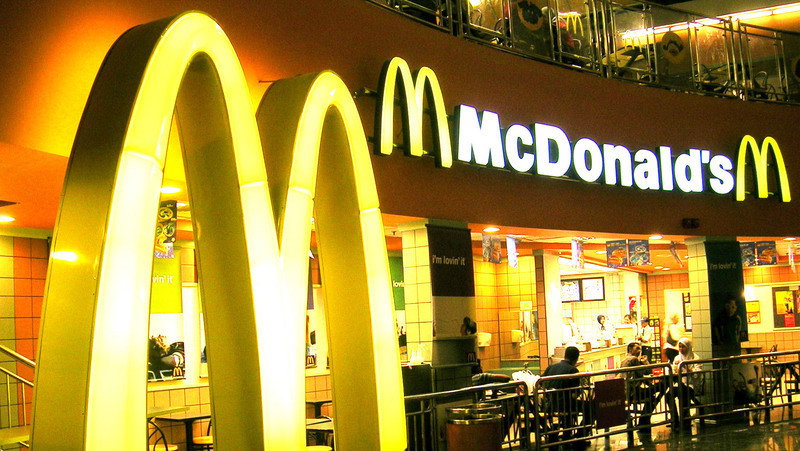

The U.S. fast food chain arrived in Romania in 1995, opening the gates of capitalism with a restaurant in Piata Unirii at a time when Romania had quite few foreign investors. Today, two decades later, on a market dominated by multinationals and foreign brands, McDonald’s has decided to sell the local business and stay on the market only in a franchise system.
On the first day the unit of Piata Unirii was opened, 40,000 people came to eat there, according to company data. Today, the fast-food chain has 150,000 clients daily in its almost 70 units.
For 16 years, the name of Marian Alecu, the first chief executive officer of McDonald’s Romania, has been associated with McDonald’s. He ran the chain until 2009.
In its first years of presence locally, the group expanded aggressively, before slowing down the pace during the crisis and opening 1-2 units per annum at most. However, the company’s officials have repeatedly stated there is room for at least another 30 McDonald’s units on the local market.
The US group’s decision to sell the Romanian business and stay on the market in a franchise system may mean expansion is likely to be resumed. By edition close, McDonald’s representatives did not answer ZF’s request for information on the sale and future plans.
According to market sources, the management team of the fast food chain will remain the same. Thus, Daniel Boaje, the Romanian now running McDonald’s business in Romania, will stay at the network’s helm. Moreover, the general manager will get a number of shares to stay with the company and secure the continuity of the business, according to another source.
Ziarul Financiar announced the US group is seeking a master franchisee as early as last summer, but the company’s Romanian officials denied the information firmly. Both local and foreign entrepreneurs were interested in taking over McDonald’s, but the business was finally sold to a Russian entrepreneur about whom little is known.
In Russia, the business is directly owned by the Americans, but in Romania the business was sold to a Russian. Internationally, Romania is part of the same region as Russia and the business is run by a Russian executive.
The sale of McDonald’s Romania to a master franchisee is set to bring several tens of million euros in the US group’s pockets.
“The group may cash in a small sum, but may agree with the master franchisee for the latter to invest another tens of million euros in the local business to expand it or revamp it,” says a source familiar with talks.
Beside the sum generated for the business transfer, McDonald’s will also cash in from the master franchisee a percentage of annual revenue, which currently nears EUR100 million. “The percentage usually ranges between 15 and 20%,” according to a market source.
However, the takeover is doubled by a series of conditions, such as a number of annual openings or a sum the master franchisee must invest.
The business model McDonald’s now applies in Romania, direct arrival followed by the transfer of operations to a franchisee has also been applied by the chain on several markets of Eastern Europe. This is the company’s strategy in Europe for small markets with less than 150 restaurants, says a source close to the company.
Another reason why the US group decided to give the business to a master franchisee is that the business is not growing as rapidly as before as the market has become crowded.
The sale to a master franchisee means lower revenue, but also lower expenses for the US group. Thus, McDonald’s may stand to gain in terms of profit, the more so as the company’s net figures have weakened in Romania.
The new owner will take both the activity of restaurants, and the commercial spaces and the land plots McDonald’s owns in Romania. Ever since it entered Romania, the US group has bet on leasing land plots, so that today McDonald’s owns only around ten land plots against a 70-unit network.
At the time the group entered Romania, the number of foreign investors present locally was very low, so that the negotiation power given by the brand allowed the company to sign some contracts that are valid up to the present. It got very good conditions on the long term as well.
While it entered Romania directly, McDonald’s has also offered franchises to experienced local entrepreneurs, with seven local units being in a franchise system.
According to the last data announced by McDonald’s more than a year ago, the US group has not granted any new franchise for around five years. According to market sources, the group has not developed the system further as it planned to transfer the business to a master franchisee.
The future entrepreneur will have to pay a sum to the parent company at the beginning (over half a million euros, according to ZF sources) and then monthly pay a percentage of sales. To be able to operate on the long term, to be able to bear the costs and franchise taxes and has some money left, the margin of such a unit must near 40%, according to the same sources.
(English version by Catalina Apostoiu)