

Franklin Templeton is one of the world’s 20 largest asset managers, which in Romania manages Fondul Proprietatea investment fund.
Banks and Governments are equally responsible for the size of the sovereign crisis debt.
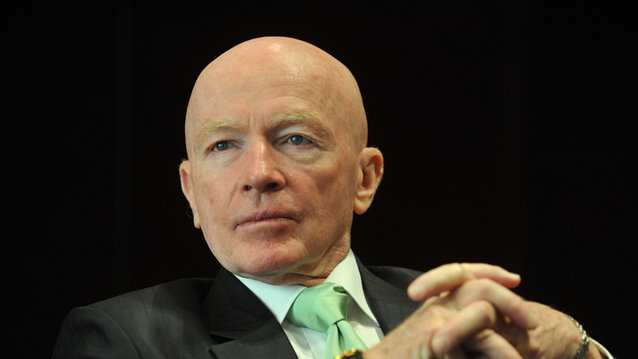
The former because they intoxicated the economy with complicated financial products in their race for profits and the latter because they are saving banks from their own greed at the expense of common people, said Mark Mobius, also known as the guru of emerging markets, in an interview to Ziarul Financiar.
The sovereign debt crisis brought governments, economies and nations to their knees before financial markets, the same markets that the governments had saved from collapse in the autumn of 2008, when the deficit hole was widened by the trillions of dollars that were pumped into the markets as a lifeline.
First Greece, then Italy and Spain, France and Germany were not spared from the faceless threat of investors on financial markets, who are asking for increasingly high yields in order to buy bonds issued by these countries and thus finance their economies, and in this way avoid a collapse. In order to gain time, central banks are again pumping thousands of billions of euros into the markets, hoping to persuade investors to place their money, and governments pledge to take drastic austerity measures to reduce their budget deficits and pay their debts. Still, uncertainty and confusion dominate.
“These are extremely difficult and confusing times for common people, and everyone is to blame for that: banks and governments equally. The basic structure of the financial system is flawed, and it ended up this way after banks created and sold derivatives with unknown consequences to the system, which can generate extensive losses. Governments are guilty because they allowed banks to develop these complicated, extremely opaque products, whose trajectory in the financial system is extremely difficult if not impossible to follow,” said Mark Mobius.
The US group is among the world’s top 20 asset managers, with over $670 billion in assets under management, an important part of this system. Derivatives would not have come to be as developed as they are now had there not been investment funds interested in buying them.
However, Mark Mobius is known as a traditional investor, dedicated to equity investments, who bases his investment decisions on visits to companies and on meetings with their management.
Mobius notes that CDSs (Credit Default Swaps), derivatives through which debts are insured against the risk of default, are extremely toxic. Thursday November 24, Romania’s risk premium reflected in CDS levels continued to climb to 485 percentage points (4.85%) and rose nearly 50 points in the last week.
This means an investor has to pay EUR485,000 to insure an exposure of EUR10 million to Romania against the risk of default.
“Banks sold such CDSs significantly above the debts they insure, so if a country could not repay its debts, the bank would have to pay via the CDS even twenty times more than the unpaid debt to investors. This is precisely what the Central European Bank fears and is doing everything it can to make sure Spain or Portugal or another euro zone country doesn’t default, because the value of CDS connected to the debts of these countries is huge and could explode in the face of banks. The danger lurking behind is much more significant because it is not known exactly how many such CDS have been sold, who owns them and especially how much they are worth,” Mobius also said.
He warns banks should not be saved from bankruptcy, but should be left to take the losses because they invested in such instruments in the first place.
“Governments print money to save banks, but it doesn’t prevent a worldwide crash, only puts it off. Printing money creates inflation and inflation bites into individuals’ savings.”
In order to avoid a collapse, capitalism needs to change, and Mark Mobius says the rescue will come from banks being responsible for the investments they make and from the financial education of common people.
Another solution is to make derivatives transparent, standardize them and list them on the stock exchange so that their risk is known and managed.
(English version by Daniela Stoican)