
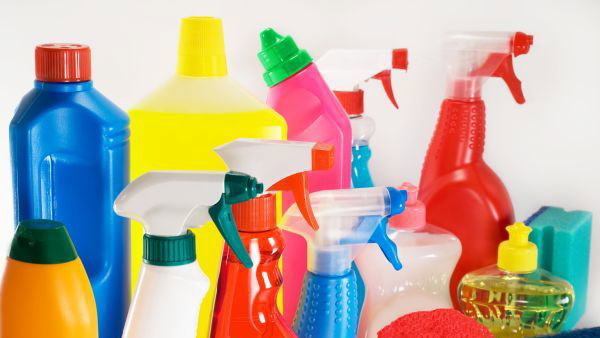

The entrepreneurs, who got funds from the European Union, are already selling their dishwashing and laundry detergents and their liquid soap branded as Dolfy and Euro to more than 1,200 stores throughout the country and several hotels and restaurants.
The plant in Tiparesti commune, Prahova County, which is currently working at 10% capacity, might make 2.5 million lei (almost EUR0.6 million) in revenue this year.
“Our company (Euro Grup i.e.) started out in the trade business. Well over six years ago, a customer came and suggested we open a detergent production facility. He offered to buy everything we would make,” recalls Daniel Stoica, 44, the manager of Euro Grup and one of its shareholders.
The customer, whose name he will not reveal, continues to buy products from the company, but is no longer the only one that does so.
Euro Grup started making detergents in Nehoiu, Buzau County (SE Romania) where it had a non-automated production line making detergent sold in five-liter containers. The space the company was renting was sold a few years later and it had to move, first to Ploiesti, then to Tiparesti, where production started in 2011.
“We did not just happen to pick this location. My parents are from around here and they had this land, which I bought from my father,” Daniel Stoica says.
He started his own business with several family members in 1999. He now owns transport and recycling businesses.
His business plans do not stop here. The Romanian entrepreneur wants to open a PET recycling facility on a 10,000 square meter plot and says he submitted a funding project to the European Union to get money for the planned EUR2.2 million investment.
“We’ll sign the contract by June and then it takes two years to complete it.” He says he chose this business because only 15% of the plastics are recycled and there is demand for it, especially from China.
China is also where he wants to import the raw materials required by his liquid detergent plant from. Stoica says he tried to get what he needed from the major groups in Europe, but they sent him to their local representative offices.
“They wouldn’t sell to us directly. Factoring in all costs, including transportation from China, we arrive at a 30%-40% lower price than we would have got had we bought locally.”
The plant in Tiparesti has an automated detergent production and bottling line and a machine that packages shampoo, hair conditioner and shower gel in sachets.
The products made in Tiparesti come in various types of packaging from several gram sachets to five liter containers. The company is due to start production of creams and cosmetics in a matter of weeks.
The plant is currently operating at 10% of its 500 ton/month capacity, which should be attained if people were working in three shifts. The plans are to reach 25% this year and 100% in three years.
Its products are sold in some hotels and restaurants and via retail stores such as those owned by Interex or in the Mega Image chain. In addition, more than 1,000 traditional stores buy from this plant.
“All the surrounding towns are buying from us.”
However, 70% of the business comes from the hotel and restaurant customers, and only 30% from retailers.
The company also plans to export and is in talks with a company from Bulgaria, to which a customer recommended its products.
“We’re just starting to think about profit. We expect a 15% profit margin at a RON2.5 million turnover,” Stoica said.
(English version by Loredana Fratila-Cristescu)