
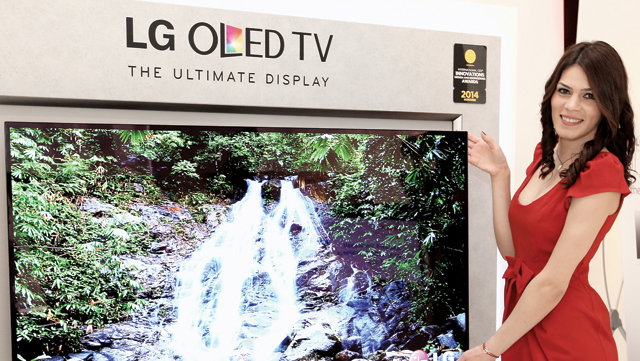

“In 2014, the market reached 970,000 units, meaning a 35% increase against 2013. Buyers’ optimism increased, they have confidence in the future and started consuming after 2-3 year during which they saved. I expected 2014 growth to stand at just 10%,” Sorin Spinu, senior sales manager of the home entertainment units of LG Electronics Romania, the second largest player on Romania’s TV set market, told ZF.
In early 2014, most TV set producers present in Romania forecast modest market growth, of just several percentage points, but sales started rising in the second half of the year. In the first nine months of 2014, the market had advanced by around 30% in terms of the number of units delivered and by 20% by sales value.
Overall, in 2014 the value of Romania’s TV set market stood at EUR290 million, up 22% against 2013.
“We have a 35% increase in quantitative terms and of 22% by value, meaning the average price dropped most likely because people preferred to buy cheaper models of B or C category brands,” explained Spinu, adding the average sale price revolved around EUR300 (RON1,350).
The local TV set market is a price oriented one, with Romania being the country with the lowest prices in the CEE area for small diagonal models.
For LG, sales of 32-inch models dropped in 2014. Instead, sales of large screen TVs rose. The local subsidiary of the South-Korean company in 2014 switched from a volume-based strategy to a strategy aiming at increased profitability.
In this context, almost half of LG sales in Romania were sales of smart TVs.
“We’re trying to educate the public to buy high performing products securing them access to the Internet, Facebook, games, applications, as well as video on demand services,” said LG Romania representative.
At market level, sales of smart TVs accounted for 34% in total sales by value, more than in 2013.
In 2014, LG held an 18% market share in Romania by value, thus ranking second.
For 2015, LG representative estimates the local TV market will register lower growth than in 2014, of around 15% quantitatively. However, he does not rule out the possibility of a 30% percentage being reached again amid the shift from analog to digital signal.
(English version by Catalina Apostoiu)