
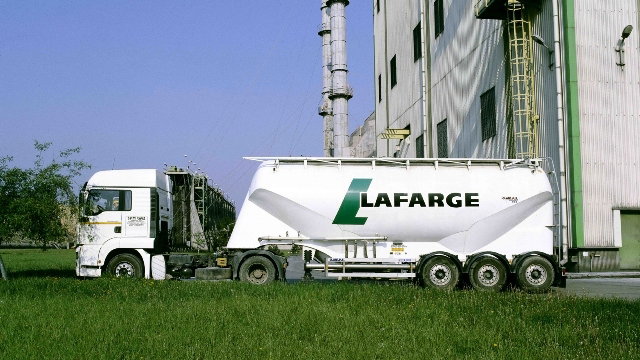
Lafarge Ciment has been the most profitable cement producer in Romania year by year, beating competition (Holcim and German-held HeidelbergCement’s subsidiary Carpat Cement Holding) in terms of profit value and margin.
Lafarge has invested more than EUR700 million in Romania since its arrival in 1997, which means the profits of the largest company of the group, Lafarge Ciment, have already helped recoup the investment, according to ZF estimates.
Lafarge Ciment reached its profit margin peak, more than 44% in 2008, when it posted almost EUR370 million revenue and EUR164 million net profit. Carpatcement Holding’s margin stood at about 30% that year, as revenue amounted to EUR294 million and net profit to EUR88 million. Holcim Romania posted EUR372 million revenue and its profit margin reached 8%.
As the construction sector witnessed a significant decline of about 40% during the crisis, Lafarge Ciment’s financial results went down, too. The revenue decline started in 2009 with a slight rebound in 2012, while net profit shrank year after year. Lafarge Ciment’s revenue amounted to a little more than EUR155 million in 2013, matching the 2004-2005 levels. On the other hand, the net profit reached EUR10 million last year, the lowest level after 2002.
The other Lafarge companies in Romania besides Lafarge Ciment are Lafarge Agregate Betoane, Lafarge Betoane, Lafarge Comnord, Sicim and Lafarge RMX & Agregate.
To be able to merge with Holcim, Lafarge will sell all its Romanian assets, so the new entity will not have an over 50% market share in the country after the merger.
The most important Romanian assets of the French group are two cement plants in Medgidia (Constanta County), and Hoghiz (Brasov), as well as the cement mill in Targu-Jiu. Annual nameplate capacity of the plants is 4.5 million tons.
Lafarge also has 15 concrete batching plants in Bucharest, Iasi, Ploiesti, Constanta, Braila and Cluj and 4 portable such plants, according to the corporate website. It also owns several borrow pits, construction aggregate quarries etc. The market value of Lafarge’s Romanian assets might be at least EUR500 million, according to ZF estimates.
The new group created by the merger will be called LafargeHolcim and keep Holcim’s assets in Romania (two cement plants in Campulung and Alesd, a cement mill and a cement terminal in Turda, 16 concrete batching plants, 5 aggregate plants, 2 special binders plants and a cement terminal in Bucharest).
Holcim Romania posted EUR202 million revenue in 2013, down 5% on 2012, while net loss stood at EUR1.4 million, six times lower than in the previous year.
(English version by Loredana Fratila-Cristescu)