
Geographical and cultural proximity to the West turned Transylvania and Banat into a hub of auto industry so in countries like Arad, Brasov, Timis, Bistrita Nasaud, Caras Severin and Sibiu at least three of the five largest exporters are automotive component manufacturers. The third region of the country is Muntenia, driven by Bucharest and the surrounding area.
The automotive industry ships EUR11.2 billion worth of components abroad.
“The more developed infrastructure and the quality of the workforce universities in the western part of Romania turned out mattered when it came to attracting automotive industry investments. Culturally speaking, these counties are close to the West so syncing the investments here to the Western European procedures and organization is easier,” says Cristian Parvan, general secretary of the Businesspeople Association of Romania (AOAR).
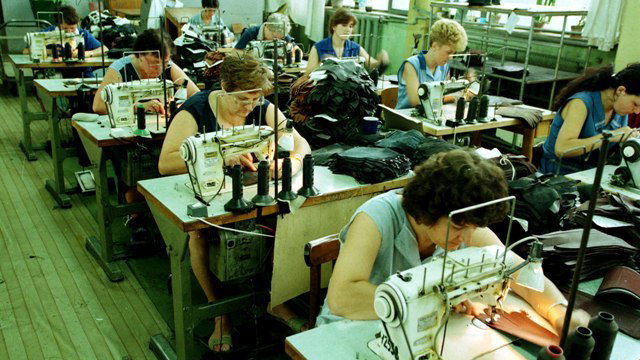
In the eastern part of the country, Moldavia, the main industries before 1989 were chemical, metal and textile industry, Parvan says.
“The textile industry was developed in the area before 1989 because it required relatively low investment and created a high number of jobs.”
Textile companies continue to focus on this area and the poor counties of Romania where the average wage is by up to one third lower than the country average. Romania has been and continues to be one of the world’s leading textile producers because of the cheap labor, geographic position and skilled workforce. Textile, clothing and footwear contributed EUR5.2 billion to Romania’s EUR52 billion exports last year.
Apparel that goes to Dolce&Gabbana, Burberry, Zara and H&M and the Ara and Rieker shoes account for 10% of Romania’s exports.
“Only the big cities of Moldavia, Iasi and Bacau, are seeing demand for outsourcing centers. Iasi is also shaping up as an IT center, but the only other investors in the rest of the region are textile industry companies,” says Cristina Savuica, general manager of recruitment firm Lugera.
“There is still demand for employees in this industry but we have a hard time finding them because the pay is low and people leave [to work] abroad.”
Transylvania and Banat rely on two main industries, automotive and IT, Savuica says. “Cluj has a hub with several hundred IT companies.”
The development gap between Moldavia and Transylvania can be seen in infrastructure, as well, one of the main factors investors consider.
Banat and Transylvania have attracted the bulk of highway and national road investments in the past five years, which is why exports of the two areas are 15 times higher than Moldavia’s.
Transylvania and Banat, where 6.8 million people or one third of Romania’s population live, have attracted about 16 billion lei (EUR3.6 billion) investments in highways and national roads in the last five years, while Moldavia, with a population of 4.2 million people, only saw RON1.8 billion spent on roads, according to a ZF analysis based on the data from Romania’s national company in charge of highways and national roads CNADNR.
“The plans currently include Corridor 9 that should connect Moldavia to Muntenia. We should connect Moldavia to Transylvania directly and then to the West. There was a plan to build a highway connecting all the counties in the northern Romania and then to Budapest but did not materialize and those counties are still isolated,” Parvan says.
He believes Moldavia could develop only though high value added industries. One such industry is the food industry, which could make quick progress and use the already existing natural resources. Workforce would need to specialize, though.
“Iasi has developed as an innovation center, but it needs to radiate this development into the region. So far we’ve got an enclave in an underdeveloped area, where the population does not speak foreign languages, which prevents companies from opening call centers or business centers in the area.”
Another sector that could develop is tourism, Parvan says.
Moldavia should get from a lot of investment to catch up with the rest of the country but investors go where infrastructure is developed and workforce already skilled. Moldavia is the poorest region of Romania with a gross domestic product per capita of only EUR4,300, compared with the national average of EUR7,500.
“Moldavia managed to attract textile and footwear producers for two reasons: it already had the expertise before 1989, so the workforce was already skilled, and the wages were the lowest in Romania, so this was a good premise for development for companies,” says Bernard Cheer, CEO of Artifex, one of the most important companies in the local textile industry, with manufacturing operations in the Moldavian county of Vrancea.
(English version by Loredana Fratila-Cristescu)